
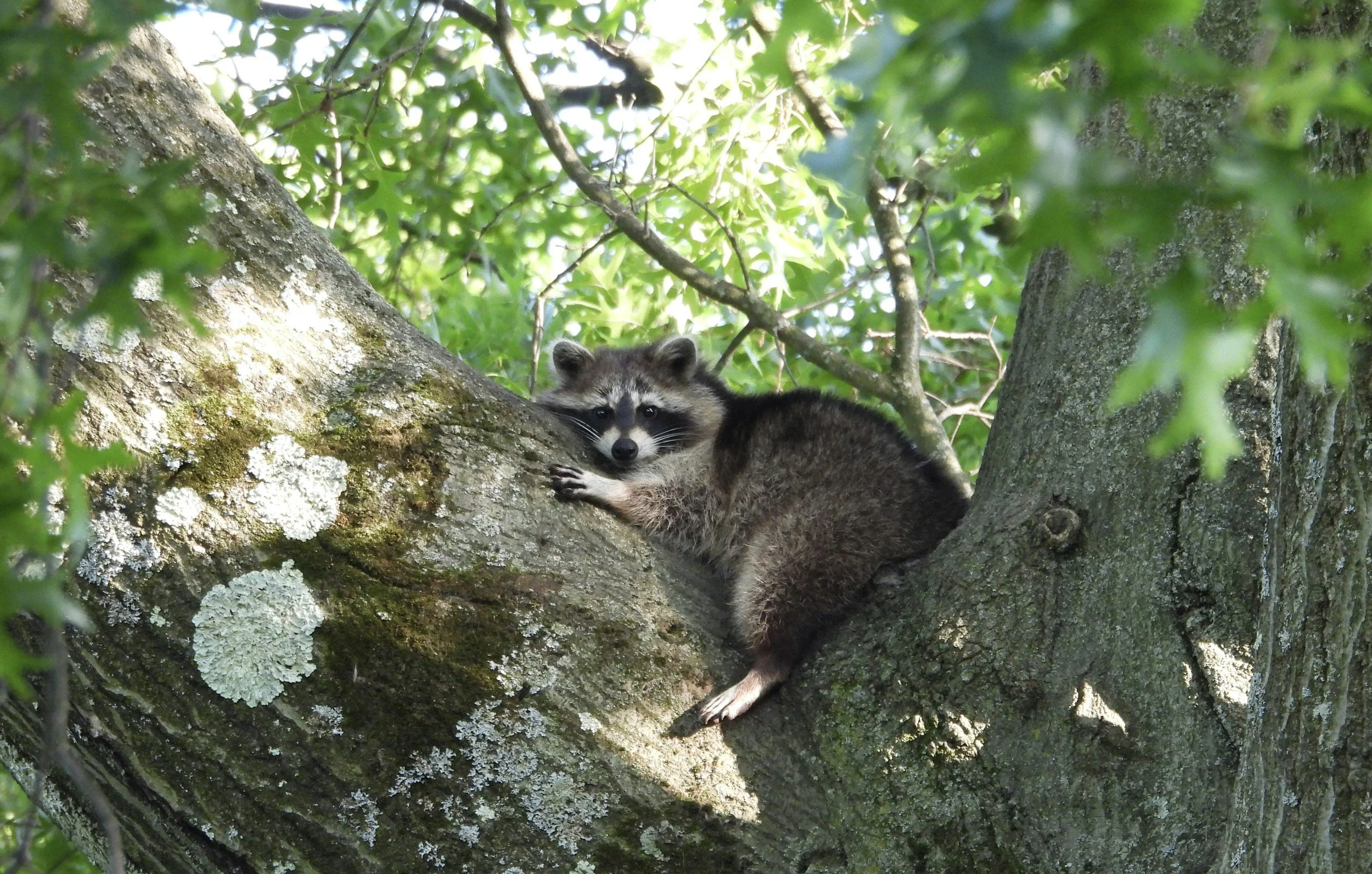
Raccoon Removal at Smith Mountain Lake, Va
Raccoon Removal at Smith Mountain Lake, VA
Raccoons are one of the most common wildlife problems homeowners encounter around Smith Mountain Lake. These intelligent and highly adaptable animals frequently explore homes, attics, crawlspaces, and shoreline structures in search of food and shelter. If you're hearing heavy footsteps in the attic — like a large man is walking around in boots — noticing damage along your roofline, or seeing raccoons repeatedly around your property at night, a raccoon may have already found a way inside.
Smith Mountain Lake provides ideal raccoon habitat — abundant food sources along the shoreline (fish, crayfish, frogs), easy roof access via nearby trees, dock pilings, and deck railings, and attic spaces that resemble the hollow trees raccoons naturally use. Many lake homes are used seasonally, which means a raccoon can establish a full attic den over a winter while the home sits empty. We often find that mothers return to the same attic year after year — and their daughters try to as well.
Detailed inspection of the home and property — entry points, damage extent, structural weaknesses, conditions attracting raccoons, and whether young animals may be present.
Humane trapping, one-way exclusion devices, or manual removal as the situation requires. Special care during spring breeding season to ensure young raccoons aren't separated from their mother in a way that causes more damage.
Reinforcing roof transitions, repairing soffits and fascia, installing wildlife-rated vent covers and chimney caps. Without proper repair, raccoons or other animals will return.
We evaluate the rest of the home for other vulnerable spots and provide honest recommendations — without pushing unnecessary work.
- Secure trash containers with locking lids
- Avoid leaving pet food or bird feeders out overnight
- Trim tree branches that touch or overhang the roof
- Install chimney caps
- Inspect rooflines for gaps or damaged areas before and after each season
Hearing something in your attic at the lake?
A professional inspection identifies the problem, explains what's happening, and gives you a clear path forward — before the damage gets expensive.
Schedule an Inspection — $75 Contact Us