
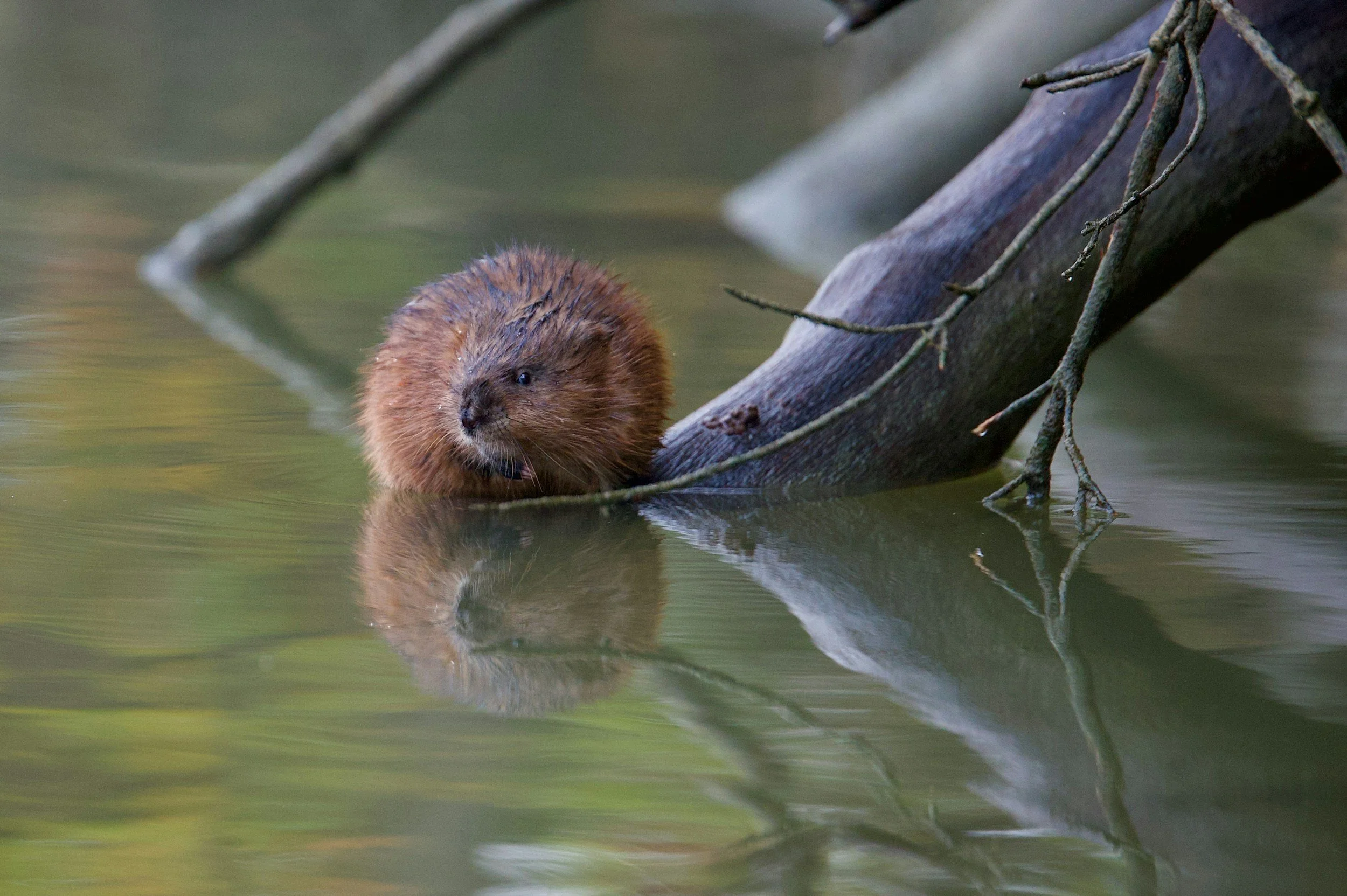
Muskrat Removal at Smith Mountain Lake, Va
Muskrat Removal at Smith Mountain Lake, VA
Muskrats are a common aquatic mammal found throughout the waterways surrounding Smith Mountain Lake. While a natural part of Virginia's wetland ecosystem, their burrowing behavior creates real problems for shoreline properties, docks, and drainage areas. Muskrats can easily chew through the floaters under docks, creating cozy dens for them and an expensive sinking feeling for you. If you're noticing holes in shoreline banks, collapsing soil near the water, or a dock sitting lower than it should be, muskrats may be active nearby.
Muskrats prefer slow-moving water with plenty of vegetation along the shoreline — and the coves, ponds, and tributary creeks surrounding SML provide ideal habitat. Unlike beavers, muskrats rarely cut trees. Instead they dig bank burrows extending into shoreline soil and have developed a habit of digging into the foam flotation under floating docks. A muskrat doesn't need a large opening — once inside the foam, they hollow out a den cavity that can compromise the dock's buoyancy significantly before anyone notices. Shoreline bank burrowing is equally damaging, weakening retaining walls and riprap from behind.
- Dock flotation failure from chewed foam — expensive to repair or replace
- Erosion of shoreline banks and retaining wall undermining
- Bank collapse near structures, walkways, and dock connections
- Damage to pond dams and drainage areas on adjacent properties
- Weakening of riprap that protects the shoreline from wave erosion
Evaluate the shoreline and surrounding property — active burrow entrances, dock foam damage, areas of bank erosion, feeding locations, and structural risks to docks and retaining walls.
Methods comply with Virginia wildlife regulations and are appropriate for shoreline environments. Traps placed at active burrow entrances or feeding areas for efficient, targeted capture.
After removal, burrow entrances are addressed to prevent continued erosion and discourage reoccupation. Dock foam damage assessment provided for repair planning.
Shoreline maintenance guidance, bank reinforcement options, and dock protection measures to reduce the likelihood of future burrowing activity.
- Inspect floating dock foam annually — push down on each section to check for unexpected softness
- Monitor shoreline banks for burrow holes, especially in late summer and fall
- Reinforce vulnerable banks and retaining walls with hardware cloth or riprap before muskrats find soft soil
- Inspect pond dams and drainage areas for burrowing activity
- Early detection of muskrat burrows prevents larger structural issues
Muskrats damaging your shoreline or dock at Smith Mountain Lake?
Early intervention prevents further erosion and stops a small burrow from becoming a significant structural problem. Start with an inspection.
Schedule an Inspection — $75 Contact Us