
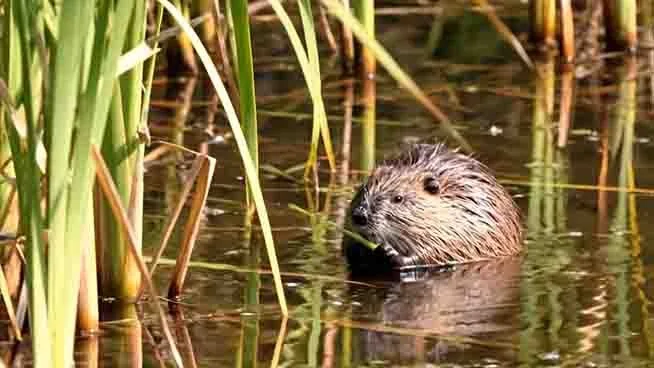
What Does Muskrat Removal Cost?
Honest, transparent pricing for muskrat trapping, tunnel repair, and shoreline protection across South-Central Virginia. Ponds, ditches, dam banks, and lake properties — no shortcuts.
Call us: (434) 608-9636
- Inspection $75
- Trap setup $325
- One return visit $85
- Inspection $175
- Trap setup $325
- Three return visits $255
- Inspection $175
- Trap setup $325
- Full exclusion barrier $1,800
- Rock reinforcement $900
- Inspection $195
- Trap setup $325
- Four return visits $340
- Water-level control $850
- Shoreline repair $1,500
These are examples, not quotes. Your written estimate will reflect your actual site conditions, water access, and terrain.
| Inspection | $75 (small pond) — $175 (moderate/dam) — $195 (high-erosion) |
| Trapping setup | $325 + $85 per return visit |
| Tunnel repair | $350–$900 |
| Exclusion & shore protection | Typical $800–$2,000 — complex $2,000–$4,500+ |
- Full shoreline and dam inspection by foot or canoe where needed
- Identification of burrow openings, feeding slides, and den chambers
- Water depth and erosion assessment
- Photos or drone documentation when applicable
- Clear written plan outlining trapping, repair, and prevention options
Why this matters for muskrats: Tunnels often extend several feet into a bank and may not be visible from the surface. A proper inspection determines how extensive the damage is and how to repair it safely — without worsening existing erosion or triggering leaks.
- Up to 2 traps + 2 cellular monitoring cameras for 24/7 oversight
- Placement along active feeding runs and tunnel entrances
- Daily or instant notification when captures occur
- Humane handling and removal following Virginia wildlife regulations
Why cameras: Remote monitoring means faster response, no neglected traps, and better animal welfare — particularly important for water-adjacent sites where checking traps on foot or by canoe adds time and cost.
- Verify all animals are gone before any soil work begins
- Collapse or backfill tunnel systems to prevent reuse
- Compact and stabilize soil or clay as needed
- Photo documentation before and after
Why it matters: Muskrat tunnels can undermine banks and cause sudden washouts or sinkholes — especially on pond dam faces where water pressure is constant. Proper repair prevents future erosion, improves water retention, and removes the scent trail that attracts the next muskrat.
Typical ponds and ditches: $800–$2,000 | Large or high-erosion sites: $2,000–$4,500+
- Heavy-gauge hardware cloth or rock reinforcement along vulnerable banks
- Lining culvert entrances and drainage points
- Erosion control fabric or riprap where appropriate
- Optional annual monitoring to track new burrow activity
Why people choose this: Muskrats are seasonal — if conditions stay favorable, new animals will move into vacated territory. Exclusion protects the structure itself, not just against one season's population. For farm ponds and dam faces, this is the only approach that breaks the cycle.
We only recommend what's necessary for long-term stability — not extra cleanup or over-engineering.
Noticing bank damage or water loss in your pond?
Early intervention costs far less than repairing a failed dam face or collapsed bank. Start with an inspection — we'll assess the burrow extent, document the damage, and give you a clear written plan.
Schedule an Inspection Contact UsMuskrat removal in South-Central Virginia starts with an inspection ranging from $75 for a small pond to $195 for a high-erosion site. Trapping is $325 setup plus $85 per return visit. A small pond with minimal trapping totals around $485. Moderate shoreline with several tunnels runs around $755. Pond dam protection with exclusion and rock reinforcement runs around $3,200. High-erosion sites with structural repair run around $3,210.
Yes — this is the most serious consequence of an untreated muskrat infestation. Muskrat burrows can extend several feet into a dam face, weakening the structure from inside. Under water pressure, especially after heavy rain, these tunnels can cause sudden seepage, slumping, or collapse. Pond dam failures in Virginia are not rare events — they're well-documented and expensive to fix after the fact. Early detection and tunnel repair is far cheaper than dam reconstruction.
Muskrats are much smaller than beavers — roughly the size of a large rat, 1–4 lbs, with a narrow rounded tail. Beavers are 30–60 lbs with a broad flat tail and build dams across waterways. Muskrats burrow into banks rather than building dams, and their damage tends to be more insidious — weakening existing earthen structures rather than blocking water flow. See our beaver removal page if you're unsure which animal you're dealing with.
Yes — muskrats are seasonal and territorial. If the habitat conditions remain attractive (shallow water edges, aquatic vegetation, earthen banks), new muskrats will eventually move into vacated territory. Trapping alone is a temporary solution. Collapsing existing tunnels, reinforcing the bank, and installing exclusion materials at vulnerable points is what prevents recurrence season over season.
Muskrats are active year-round in Virginia but burrowing is most aggressive in spring and fall when they establish dens before breeding season and again before winter. Spring is when pond dam damage is most likely to be noticed — winter burrowing combined with spring runoff creates the conditions for bank failure. Summer is when feeding activity is highest and new litters are born, expanding the population.
Muskrats can carry tularemia and leptospirosis, both of which can affect humans through contact with contaminated water or animal tissue. They also host mites, ticks, and internal parasites. For most pond owners the health risk is low with normal precautions — but it reinforces the case for professional handling rather than attempting to trap or handle animals yourself.
We'll help you protect your property and keep the wetlands healthy for the wildlife that call it home.