
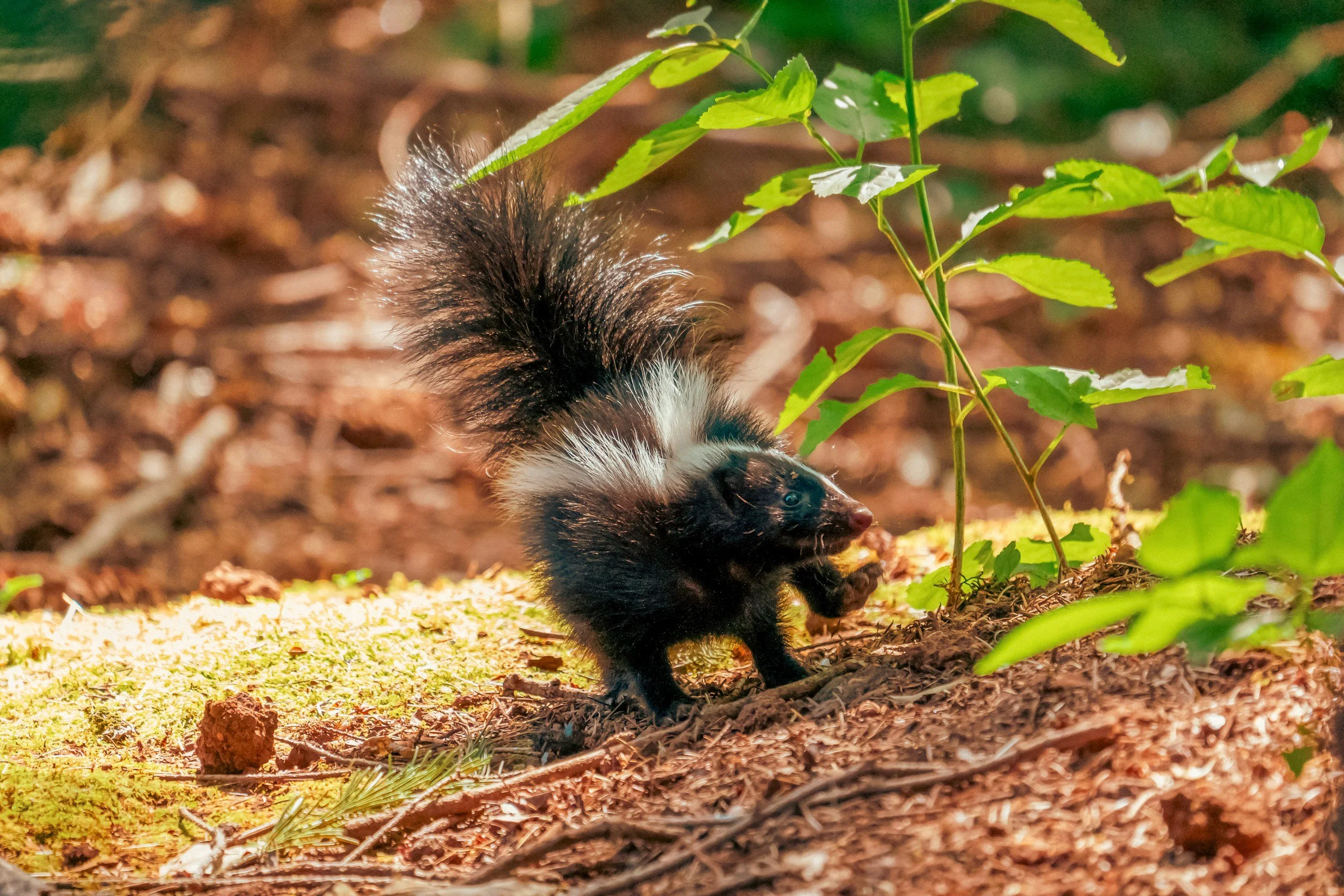
Skunk Removal in Lynchburg,Va
Skunk Removal in Lynchburg, VA
Skunks are common throughout the Lynchburg area, and for good reason — the mix of wooded neighborhoods, insect-rich lawns, creek corridors, and sheltered spaces beneath decks, sheds, and porches gives them everything they need. While skunks are generally calm and non-aggressive, they become a problem when they establish dens beneath structures. The risk of spray during removal makes this a job where experience matters significantly more than it might with other wildlife.
Lynchburg's established neighborhoods — with mature lawns full of grubs, older homes with open crawlspaces, detached garages with low gaps, and wooded lot lines providing nearby cover — provide ideal skunk habitat year-round. The James River corridor and surrounding creek systems support high insect populations that draw skunks into adjacent neighborhoods. Nursing mothers are active during the day in spring, which catches many homeowners off guard — a skunk moving around in daylight isn't necessarily sick. It may just have hungry young in a den beneath your deck.
Locate active den entrances and secondary exits, check for grub activity in the lawn, assess structural gaps beneath decks and sheds, and determine whether young may be present.
Enclosed traps placed at active den entrances. Your property stays unaffected during the removal process. Special care when young animals may be present in spring.
After removal, den entrances are properly closed to prevent reoccupation by the same or a different skunk — other skunks in the area will quickly find an empty, ready-made den.
Dig-resistant barriers installed along the base of decks and sheds provide the best long-term protection against repeat denning — the skunk simply can't get back under.
- Install dig-resistant barriers along deck and shed bases
- Treat lawns for grub infestations — removing the food source reduces skunk interest
- Secure garbage cans and compost bins with locking lids
- Remove dense ground cover or brush piles near structures
- Bring pet food inside at night — skunks will reliably find outdoor pet food
Skunk under your deck or around your Lynchburg home?
Spray-proof traps mean the removal doesn't turn into a bigger problem than the skunk itself. Early intervention before a den is fully established makes the whole job simpler.
Schedule Service Contact Us