
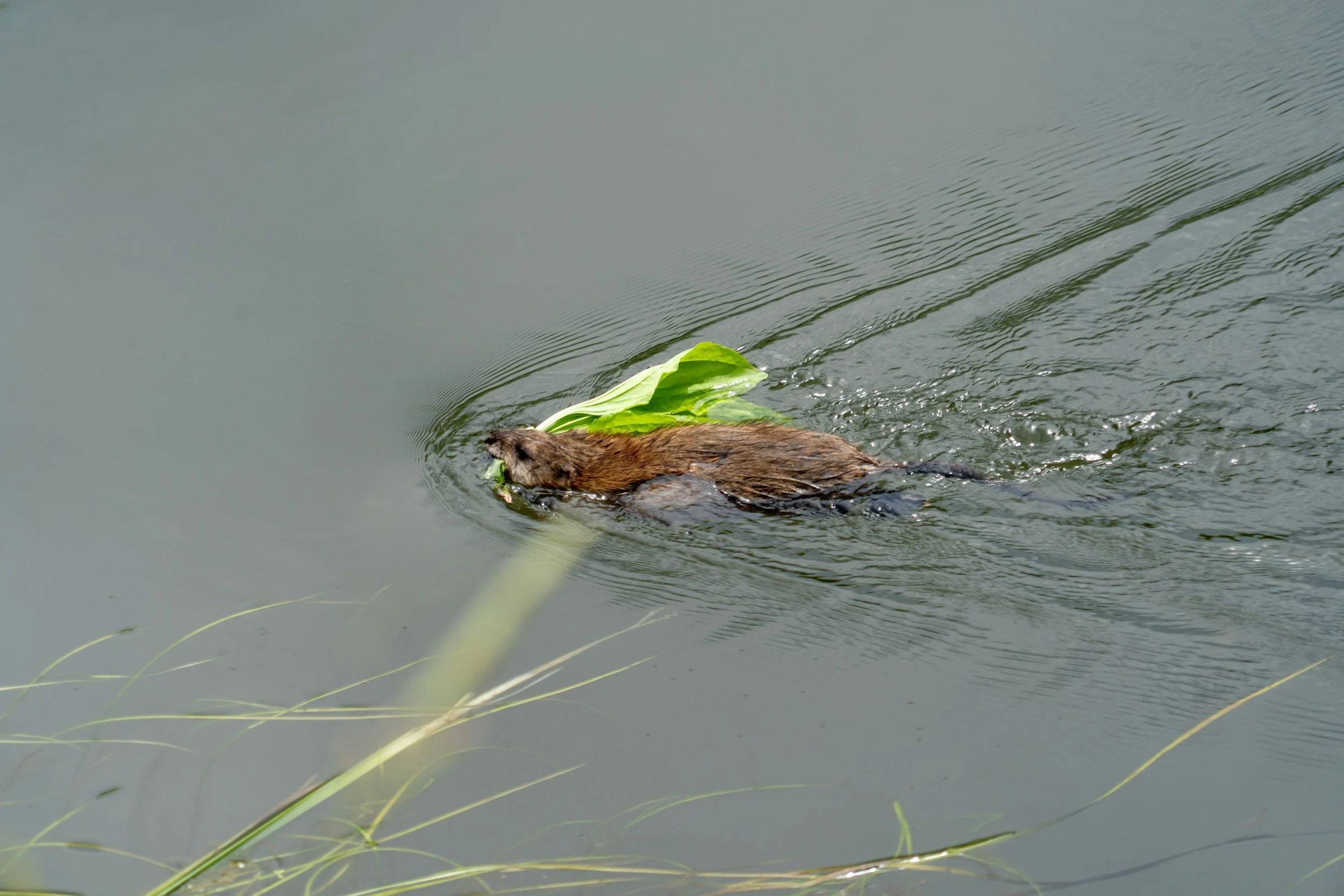
Muskrat Removal in Roanoke, VA
Muskrats are present throughout the Roanoke area, inhabiting the Roanoke River corridor, Tinker Creek, stormwater retention ponds, and drainage systems throughout the city and county. Their primary conflict with property owners is burrowing — into pond banks, retention basin embankments, and drainage features — which causes erosion, soil collapse, and structural damage over time.
Animal Dispatch handles muskrat removal throughout Roanoke.
The Roanoke River and its tributary network, combined with the stormwater retention ponds and drainage features throughout Roanoke's neighborhoods, give muskrats consistent habitat. They are primarily crepuscular and nocturnal, and their burrowing activity is often well underway before homeowners notice the soft soil or collapsed bank edge. Retention ponds in residential developments are particularly common sites — muskrats are attracted to slow-moving or still water with aquatic vegetation, and stormwater ponds fit that profile exactly. Any pond with a vegetated bank is a potential muskrat site.
- Erosion of pond and retention basin embankments from burrow tunnels
- Collapsed or soft bank edges near storm drainage features
- Damage to pond dam and outlet structures from burrowing
- Vegetation loss at pond edges from feeding and burrowing activity
- Water seepage through embankments weakened by tunnel networks
We evaluate the pond, shoreline, or drainage area — active burrow entrances, areas of bank softening or collapse, dam face condition, and any dock or structural damage. We identify the extent of burrowing activity and advise on the right removal approach.
Traps placed at active burrow entrances or feeding areas for targeted, efficient capture. Methods comply with Virginia wildlife regulations.
After removal, burrow entrances are addressed to reduce erosion and discourage re-occupation. Dam face seepage and bank damage assessment provided for repair planning.
Bank reinforcement options, vegetation management guidance, and monitoring recommendations to reduce re-establishment pressure from the regional muskrat population.
- Inspect pond bank edges and dam faces regularly — burrow holes at the waterline are the earliest actionable sign
- Monitor for soft or sinking ground near pond edges — a precursor to bank collapse or dam failure
- Manage aquatic vegetation along pond edges — dense cattails and rushes provide both food and cover
- Reinforce vulnerable bank edges with hardware cloth or riprap before muskrats find soft soil
- Early detection of muskrat burrowing prevents significantly more expensive structural repair
Muskrat problem in Roanoke?
Soft bank edges, water seeping through a dam face, or burrow holes at the waterline — early intervention prevents structural problems that are expensive to fix.
Schedule an Inspection — $75 Contact Us