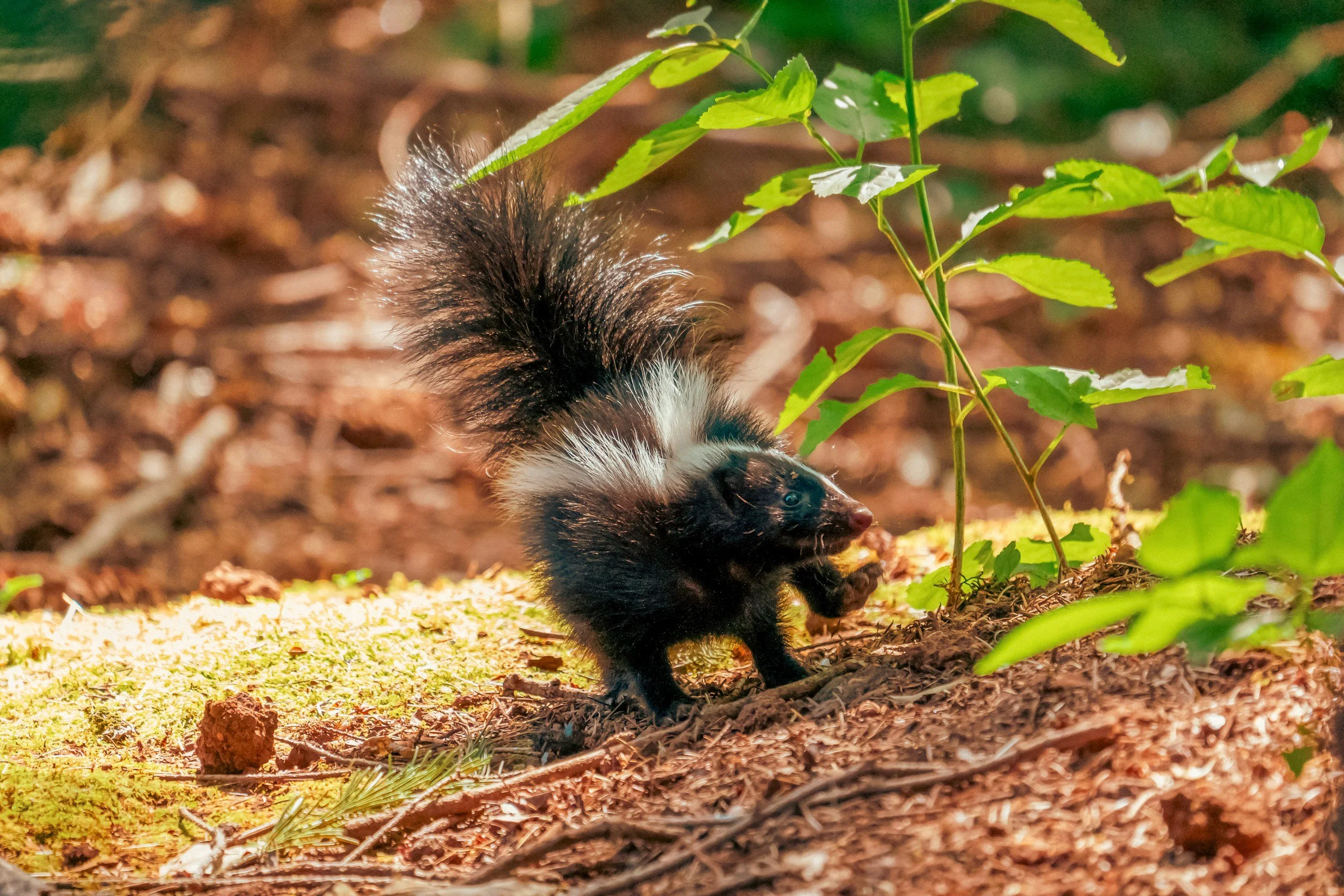
Skunk Removal in Roanoke, VA

Humane skunk removal for Roanoke, Vinton, Cave Spring, Hollins, Salem & Roanoke County

Skunks are a consistent nuisance wildlife problem in Roanoke, where wooded hillsides, green corridors, and older residential properties give them easy access to the decks, sheds, crawlspaces, and porches they prefer for denning. They don't chew or climb to get in — they use existing ground-level gaps and dig with powerful front claws.

If you're noticing a persistent musky odor beneath a deck or porch, cone-shaped digs in the lawn overnight, or a spray event permeating the house, a skunk is likely involved. Animal Dispatch handles skunk removal throughout Roanoke with humane trapping and exclusion barriers, backed by a 3-year guarantee. No inspection fee.

Don't throw money at it. Throw Animal Dispatch at it.
3-Year Exclusion Barrier Guarantee — No Inspection Fee
No upfront inspection fee for skunk removal. We set up, come back, and solve the problem. Exclusion barrier work is backed by a 3-year guarantee.
Why Roanoke properties attract skunks
Roanoke's wooded ravines, creek corridors, and green spaces give skunks natural travel routes right into residential areas. They forage nightly for grubs and insects in lawns — the small cone-shaped dig marks they leave overnight are one of the most reliable early signs. Older neighborhoods with raised wooden decks, crawlspace foundations, and detached sheds provide exactly the sheltered ground-level den sites skunks prefer. Steep rear elevations facing wooded areas are particularly common den locations.
Signs of Skunks on Your Roanoke Property
Musky odor near structureSkunks emit a faint musk even without spraying. A persistent odor beneath a deck, porch, or from a crawlspace vent is a reliable early indicator of a nearby den.
Cone-shaped lawn digsSmall cone-shaped holes appearing overnight across the yard — skunks digging for grubs and earthworms. Often spread across a wide area in multiple spots.
Ground-level entry gapsDisturbed soil or freshly dug openings 6–8 inches wide at ground level near decks, sheds, porches, or foundation edges.
Spray event odorA full spray beneath the structure is unmistakable. Odor can penetrate crawlspace insulation and HVAC systems and enter the living space. Requires immediate attention.
Nighttime sightingsSkunks are nocturnal and move slowly and deliberately. Sightings near the structure at dusk or after dark, especially near garbage, pet food, or a garden, confirm proximity to the den.
Five-toed tracksSkunk tracks show five toes on both front and rear feet with visible claw marks from digging. Found in mud, soft soil, or near den entrances.
Our Skunk Removal Process
1
Trap Setup — No Inspection Fee

We set live traps at active entry points. $225 setup gets the traps in place and the process started — no upfront inspection fee.

2
Monitoring Visits — $60 per visit

We return to check traps, remove captured animals, and reset as needed. Trapping continues until the den is cleared.

3
Exclusion Barrier

Once trapping is complete, a physical exclusion barrier is installed at the structure entry point to prevent re-entry. Backed by a 3-year guarantee.

4
Prevention Assessment

We identify other vulnerable gaps on the property and advise on what's attracting skunks — grub pressure, compost, pet food, garden access.

Frequently Asked Questions
Skunks give ample warning before spraying — stomping, hissing, raising the tail, arching the back. Spraying is a last resort because they have a limited supply and it takes time to replenish. That said, a skunk that feels cornered or threatened during trapping can and will spray. Professional trapping uses techniques and equipment specifically designed to avoid provoking the animal during capture and transport.
Skunks emit a faint musky scent even without spraying — this is the baseline odor you notice beneath a deck or from a crawlspace vent. A full spray event is dramatically stronger and immediately identifiable. If the spray occurs beneath the structure, the odor can saturate insulation and enter the living space through HVAC systems and floor gaps. Large spray events may require professional odor mitigation in addition to removal.
The existing den site remains attractive to other skunks if left open. Trapping without installing an exclusion barrier at the structure entry point typically leads to a repeat problem — a new skunk finds the same gap within a season or two. The exclusion barrier physically prevents re-entry and is backed by a 3-year guarantee.
Prevention Tips for Roanoke Homeowners
  • Install an exclusion barrier around raised decks and shed foundations — hardware cloth buried at least 12 inches down and angled outward
  • Treat your lawn for grubs — grub pressure is the primary reason skunks forage in residential yards
  • Secure garbage and compost with locking lids
  • Remove pet food overnight — skunks are opportunistic feeders
  • Fill in abandoned burrow entrances promptly — empty dens attract new animals
  • Inspect ground-level gaps around deck footings and crawlspace vents each spring

Skunk problem in Roanoke?

The sooner the den is addressed, the lower the risk of a spray event beneath the structure. No inspection fee to get started.

Schedule Trap Setup — No Inspection Fee Contact Us