
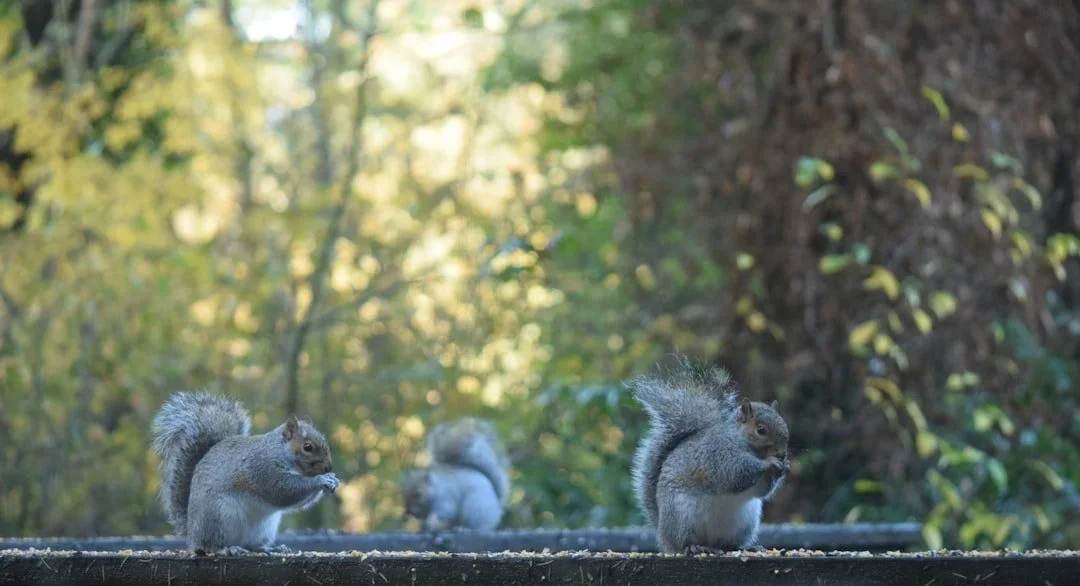
Gray Squirrel Removal in Forest, VA
Forest properties — large lots, mature oaks and hickories, homes tucked into tree cover — are ideal gray squirrel habitat. Squirrels don't need much: a tree branch near the roofline and a soft soffit board, and they're in. Their incisors grow continuously, so gnawing on wood and building materials is constant. A small gap becomes a clean entry hole quickly.
On a large Forest home with a long roofline, squirrel problems can establish in one section and go unnoticed while they expand to secondary gaps. Animal Dispatch handles gray squirrel removal throughout Forest and Bedford County — full inspection, exclusion, and a 3-year guarantee.
Forest's large wooded lots provide abundant oak and hickory mast — exactly what gray squirrels cache by the thousands each fall. Where the food is, the squirrels follow. Large homes in Forest often have long rooflines with multiple transition zones, dormers, and vent openings that provide numerous potential entry points. Gray squirrels are diurnal and most active at sunrise and late afternoon. They apply their remarkable spatial memory — the same memory that helps them find cached nuts months later — to successful den locations, returning year after year unless the structure is properly excluded.
On Forest properties with large homes and long rooflines, we inspect every transition zone, vent, and soffit run — not just the obvious entry point.
One-way exclusion devices allow squirrels to exit but not re-enter. Timing adjusted if young kits are in the nest.
All entry points sealed — primary and all secondary gaps identified during inspection. Large rooflines often have several.
If squirrels re-enter through a point we sealed, we come back.
- Trim overhanging tree branches — Forest lots often have major limbs directly above rooflines
- Screen attic and gable vents with hardware cloth
- Inspect all roofline transition zones annually — large homes have more potential entry points
- Repair soft wood in soffits and fascia promptly
- Move bird feeders well away from the home
Squirrel problem in your Forest home?
On a large home, squirrel problems escalate quietly — multiple entries, chewed wiring, damaged insulation. An inspection catches it early.
Schedule an Inspection — $75 Contact Us