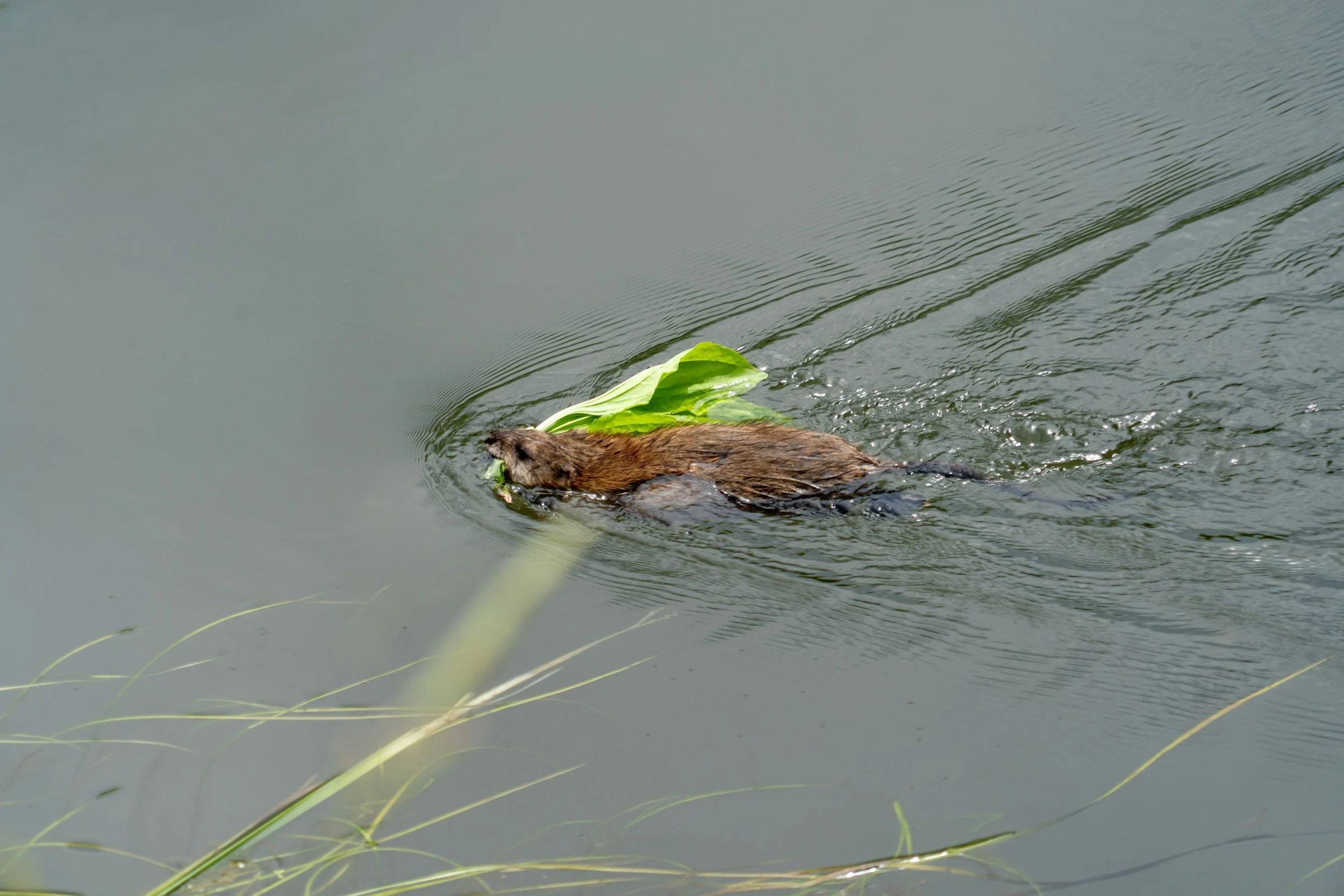
Muskrat Removal in Chatham, VA

Humane muskrat removal for Chatham, Gretna, Dry Fork, Whittles & all of Pittsylvania County

Muskrats are a regular part of wildlife work throughout Pittsylvania County, where farm ponds, drainage ditches, the Banister River, and Leesville Lake tributaries provide widespread habitat. Their burrowing into pond dams, bank edges, and drainage embankments is the primary conflict — weakening structures that can be costly to repair once damage is significant. Animal Dispatch is based in Gretna and handles muskrat removal throughout the Chatham area.

Don't throw money at it. Throw Animal Dispatch at it.
Muskrat activity near Chatham
Pittsylvania County's agricultural landscape means farm ponds and drainage ditches are found on most rural properties of any size — and muskrats are present in most of them. They burrow into pond dams and embankments, creating tunnel networks that cause water seepage, bank softening, and eventual structural failure if left unaddressed. The county's creek drainages and river tributaries provide travel corridors that connect pond to pond across adjacent properties. Being based in Gretna means this county is our home territory.
Signs of Muskrat Activity
Burrow holes at the waterlineCircular entrance holes 3–4 inches wide, located at or just above the waterline in soft bank soil — the most reliable direct indicator of muskrat activity. Often partially obscured by vegetation.
Collapsed or soft bank edgesSinking or collapsed soil near a pond or creek edge where burrow tunnels have undermined the bank structure. Often visible as a depression or crack running parallel to the waterline.
Water seepage through damSeepage appearing on the downstream face of a pond dam — wet spots, muddy patches, or trickles — indicates burrow tunnels have compromised the dam's structural integrity and require immediate attention.
Soft or sinking bank surfaceWalking near a pond edge and finding unexpectedly soft or springy ground indicates burrow tunnels running beneath the surface. A precursor to bank collapse or dam failure.
Vegetation feeding platformsSmall piles of clipped aquatic vegetation — cattails, rushes, water lilies — stacked at the water's edge near den sites. Muskrats use these as feeding stations while remaining close to the water.
Narrow tail-drag tracksFive-toed tracks in soft mud with a narrow tail drag mark between them — smaller than beaver tracks, larger than rat tracks. Found along muddy shorelines and pond edges near active burrows.
What Muskrat Damage Can Cost Near Chatham
  • Farm pond dam weakening from burrow tunnel networks
  • Water seepage through embankments and dam faces
  • Collapsed pond bank edges on farm and agricultural properties
  • Drainage ditch blockage from feeding platforms and lodge material
  • Erosion along creek and pond banks throughout the county
Our Muskrat Removal Process
1
Inspection — $75

We evaluate the pond, shoreline, or drainage area — active burrow entrances, areas of bank softening or collapse, dam face condition, and any dock or structural damage. We identify the extent of burrowing activity and advise on the right removal approach.

2
Humane Removal

Traps placed at active burrow entrances or feeding areas for targeted, efficient capture. Methods comply with Virginia wildlife regulations.

3
Burrow Management

After removal, burrow entrances are addressed to reduce erosion and discourage re-occupation. Dam face seepage and bank damage assessment provided for repair planning.

4
Prevention Recommendations

Bank reinforcement options, vegetation management guidance, and monitoring recommendations to reduce re-establishment pressure from the regional muskrat population.

Frequently Asked Questions
Size and tail are the clearest identifiers. Muskrats weigh 1.5–4 pounds — much smaller than a beaver at 35–70 pounds, and larger than a Norway rat. The tail is the key: muskrats have a narrow, laterally flattened tail that acts as a rudder; beavers have a broad, flat paddle-like tail; rats have a round, rope-like tail. Muskrats also cut aquatic vegetation rather than felling trees, and their burrow entrances are small — 3–4 inches wide — positioned at or just above the waterline.
Significant, and it compounds over time. A muskrat burrow starts as a small entrance hole and extends into a tunnel system that can run several feet into a bank or dam face. On a pond dam, this causes water seepage through the structure — which accelerates erosion and can eventually lead to partial or complete dam failure. Dock flotation damage, on water-adjacent properties, occurs when muskrats chew into foam floaters and hollow out den cavities that compromise buoyancy. Early detection is much cheaper than late-stage repair.
Possibly, if the conditions that attracted them remain. Muskrats are attracted to slow-moving or still water with aquatic vegetation and accessible bank edges. After removal, sealing or reinforcing burrow entrances, managing bank vegetation, and monitoring for new activity reduces the likelihood of re-establishment. Any property with suitable pond or waterway habitat will always have some muskrat pressure from the regional population.
It reduces immediate erosion risk but doesn't address the muskrat. If the animal is still present, it will reopen or create new burrows nearby — often faster than the fill settles. Removal first, then burrow management, is the correct sequence. After removal, we assess burrow entrances and advise on reinforcement options appropriate for the bank type and pond structure.
Protecting Your Shoreline and Pond
  • Inspect pond bank edges and dam faces regularly — burrow holes at the waterline are the earliest actionable sign
  • Monitor for soft or sinking ground near pond edges — a precursor to bank collapse or dam failure
  • Manage aquatic vegetation along pond edges — dense cattails and rushes provide both food and cover
  • Reinforce vulnerable bank edges with hardware cloth or riprap before muskrats find soft soil
  • Early detection of muskrat burrowing prevents significantly more expensive structural repair
Also Dealing With Another Animal in Chatham?

Muskrat problem in Chatham?

Soft bank edges, water seeping through a dam face, or burrow holes at the waterline — early intervention prevents structural problems that are expensive to fix.

Schedule an Inspection — $75 Contact Us