
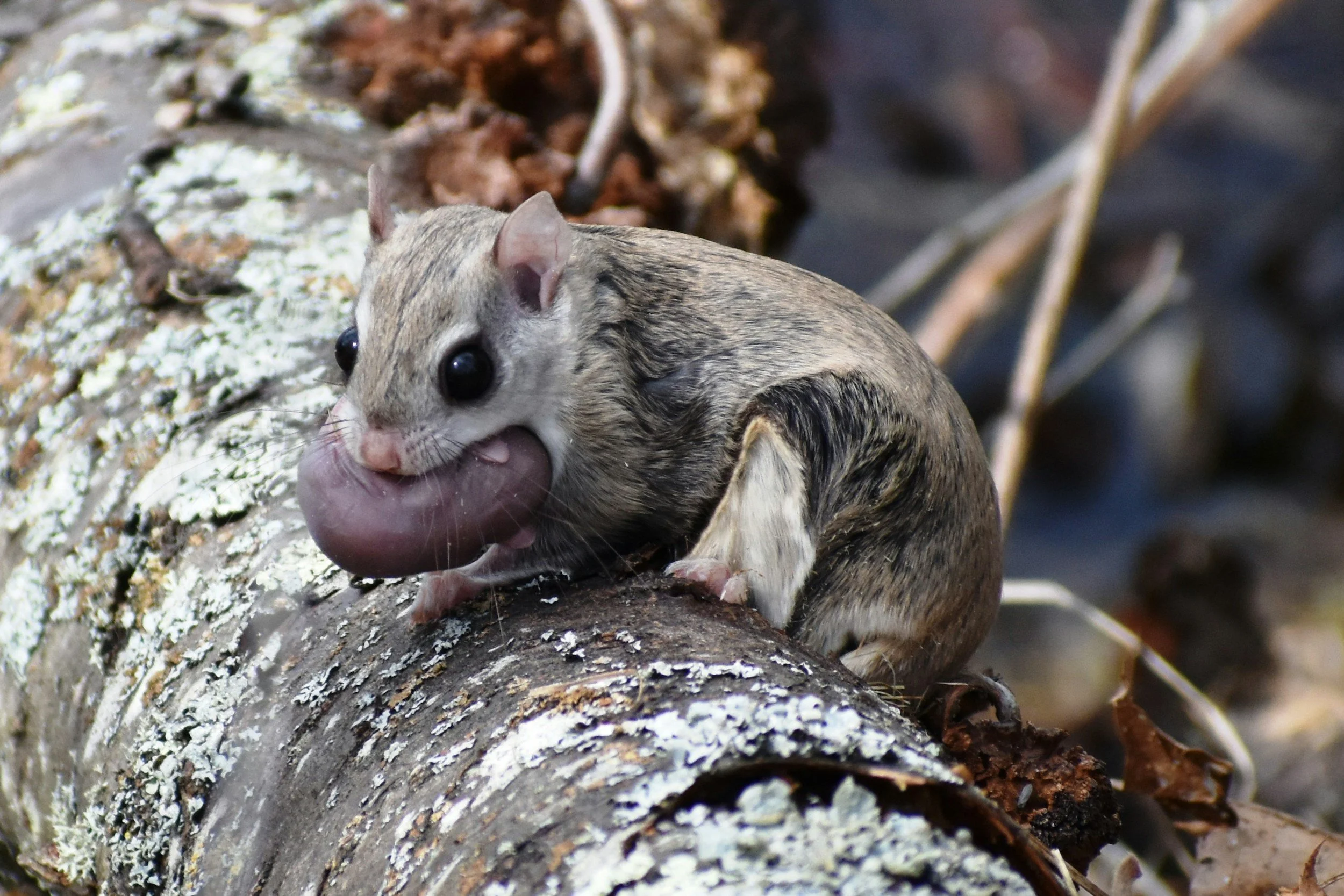
Flying Squirrel Removal in Moneta, VA
Flying squirrels are a common attic problem around Moneta and the Smith Mountain Lake communities, where wooded lots, mature hardwood canopy, and seasonal homes that sit vacant for weeks at a time allow colonies to establish without detection. A group of flying squirrels moving into a lake home in October can produce months of urine accumulation in the insulation before anyone returns.
Animal Dispatch handles flying squirrel removal throughout Moneta and Smith Mountain Lake with full-home exclusion and a 3-year guarantee. $75 inspection.
Moneta's wooded SML lots and the hardwood canopy throughout Bedford and Franklin County give Southern Flying Squirrels both food and gliding access to rooflines. Seasonal homes in the area are especially vulnerable — flying squirrels are nocturnal and soft-moving, and their nighttime activity goes entirely undetected on a vacant property. By the time a homeowner returns and notices the ammonia odor from urine-soaked insulation, the colony has often been present for a full season. Large homes with multiple vent systems require full-home exclusion — sealing any single gap while leaving others open simply relocates the problem.
- Strictly nocturnal — noise after dark only
- Colony of 5–20 in one void
- Enters through nickel-sized gaps
- No structural chewing damage
- Urine odor is primary impact
- Clustered droppings near nest
- Diurnal — active at dawn and dusk
- Typically 1–2 animals
- Chews entry holes in wood
- Chewing and wiring damage
- Nut caches in insulation
- Scattered droppings along paths
- Activity at any hour, day or night
- In walls as well as attic
- Scratching inside wall voids
- Gnaws food packaging and wiring
- Droppings throughout structure
- Enters from ground level
- Nocturnal — exits at dusk consistently
- Colony structure, similar to flying squirrel
- Crumbly guano with insect fragments
- Dark smudge marks at entry gaps
- Cannot be trapped — exclusion only
- Enters through 3/8-inch gaps
We identify the species, locate all entry points, assess nest and urine accumulation, and determine the extent of the colony. Proper identification before exclusion work begins is essential.
One-way exclusion devices allow flying squirrels to exit but not re-enter. Timing adjusted if young pups are in the nest — litters are raised twice yearly in late winter and early summer.
All entry points sealed — every gap down to nickel-size at ridge vents, gable vents, construction joints, and soffits. Partial exclusion on a flying squirrel job is rarely effective.
If flying squirrels re-enter through a point we sealed, we return. Flying squirrels have strong site fidelity and return to successful den locations — the exclusion must be complete.
- Screen ridge vents and gable vents with fine hardware cloth — standard screen is not small enough for flying squirrel gaps
- Inspect construction joints and soffit-to-roofline transitions annually — these develop gaps over time
- Trim tree branches that reach or overhang the roofline — flying squirrels use them as launch points
- If you detect ammonia odor from the attic, act quickly — colony urine damage compounds over time
- On seasonal properties, inspect the attic on arrival each season before assuming all is well
Flying squirrel problem in Moneta?
Noise after dark that sounds like mice but comes from the attic is a common flying squirrel pattern. An inspection identifies the species, the entry points, and what full-home exclusion will take.
Schedule an Inspection — $75 Contact Us