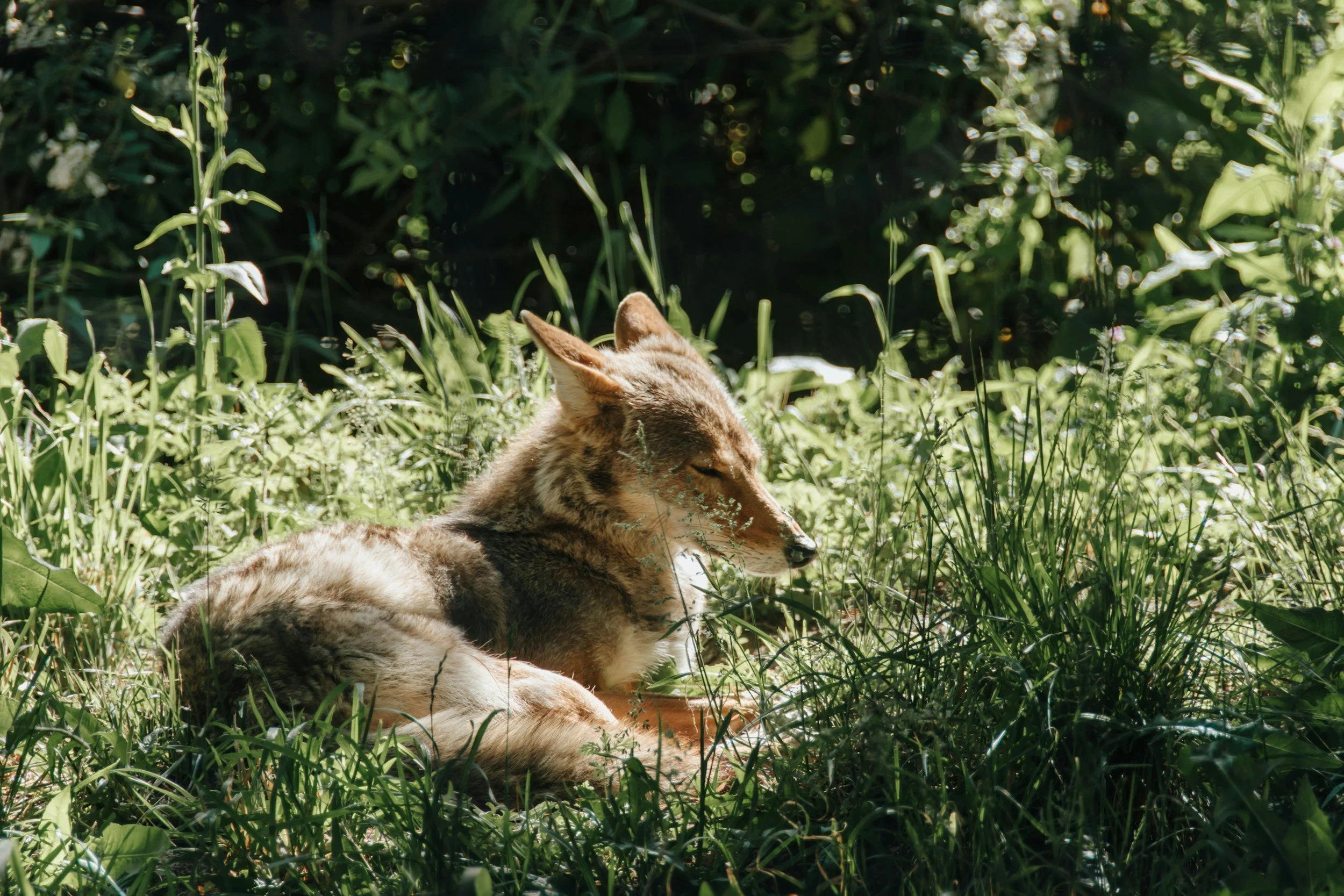
Coyote Removal in Blairs, VA

Coyote management and removal for Blairs, Mt. Hermon, Dry Fork, Keeling, Ringgold & Pittsylvania County

Coyotes are present throughout Blairs and Pittsylvania County, where the transition between suburban residential land and open farmland creates ideal coyote habitat — field edges, fence rows, wooded creek drainages, and brushy borders that coyotes use as travel corridors and hunting grounds. Their primary conflicts involve poultry predation and outdoor pet safety.

Animal Dispatch handles coyote removal in Blairs and Pittsylvania County — inspection, deterrence, humane trapping when needed, and exclusion.

Don't throw money at it. Throw Animal Dispatch at it.
Evidence first. Deterrence when possible. Trapping when necessary.
Coyotes follow scent trails and established routes. Trapping without identifying what drew them to the property — and removing it — rarely produces a lasting result. Our approach starts with understanding the specific situation before selecting a tool.
Coyote activity near Blairs
Blairs sits at the edge between suburban residential and open agricultural land — a transition zone that coyotes exploit well. They follow field edges, fence rows, and creek drainages between habitat areas, and properties at the suburban-rural edge face consistent pressure. Farm properties with poultry are the most common conflict sites. Their howls and group choruses carry across open land and are regularly reported by residents throughout the county, particularly in winter and early spring breeding season.
Common conflict situations near Blairs Poultry predation on rural properties, outdoor pet safety at the suburban-rural edge, fence row travel and nighttime vocalizations.
Signs of Coyote Activity
Howling and group chorusesTerritorial howls, yips, and group choruses — most frequent during January–March breeding season. Two or three coyotes can sound like far more, particularly across open land or at night.
Tracks along field edgesElongated dog-like tracks with front toes held closer together than a domestic dog — found along fence lines, wooded edges, creek banks, and trails. Often part of a consistent travel route.
Twisted rope-like scatDark, twisted droppings containing fur, bone fragments, seeds, or berries depending on season — often left on elevated spots or along territorial boundaries on established travel routes.
Poultry or small livestock lossMissing birds, feathers near coop perimeter, or evidence of digging beneath enclosure walls overnight. Coyotes will return to a productive food source repeatedly until access is eliminated.
Den near a structureGround-level dens beneath sheds, brush piles, or in abandoned burrows near the property — most commonly established March–May. Adults become more active and defensive during pup-rearing.
Dawn and dusk sightingsRegular sightings at the same times along consistent routes — coyotes patrol established territories predictably. Daytime sightings near homes are not automatically a sign of illness or aggression.
Our Coyote Management Process
1
Inspection — $75

Full property and perimeter assessment — tracks, scat, travel routes, den sites, livestock and poultry exposure, and attractants. Trail camera setup if activity confirmation is needed before committing to a management approach.

2
Deterrence — $250–$650

When coyotes aren't actively denning nearby or acting aggressively, deterrence — motion lighting, scent stations, audio deterrents, attractant removal — is often enough. Coyotes are intelligent and responsive to environmental changes.

3
Humane Trapping — $350 setup + $85/visit

Used when deterrence is insufficient or when coyotes are actively denning near the property. Camera-monitored traps ensure fast response. Pup presence requires careful timing — all family members must be addressed before the den can be closed.

4
Exclusion & Long-Term Protection — $600–$1,500+

Livestock and poultry enclosure assessment, perimeter fencing where warranted, and den closure once all animals are confirmed out. Removing the attractant is as important as removing the coyote.

Frequently Asked Questions
Not necessarily. Coyotes are typically most active at dusk, dawn, and through the night — but daytime sightings are common and not automatically a sign of illness or aggression. In spring and early summer, adults raising pups must forage frequently, which drives daytime activity. A coyote moving normally, hunting, or trotting through a yard is behaving naturally. Concern is warranted when a coyote is approaching people directly without any fear response, appears disoriented or is moving erratically, or when the same individual is repeatedly observed in close proximity to people. Behavior matters more than timing.
Small dogs and cats left outside overnight or unsupervised near wooded edges face real risk in areas with established coyote populations. Coyotes are opportunistic and will take advantage of encounters that present low risk to themselves. The risk is highest at dawn, dusk, and overnight — the times coyotes are most active. Supervised outdoor time, bringing pets in at night, and motion lighting near wooded edges are the most effective protective measures. Small pets should not be left outside unattended in areas where coyote activity has been confirmed.
Coyotes that are simply passing through may move on naturally. Coyotes that have identified a reliable food source — poultry, pet food, garbage, rodent activity near a structure — will return repeatedly until that source is removed or they are removed. Coyotes that have denned nearby in spring will remain through the summer pup-rearing period. Hazing — loud noises, direct eye contact, assertive body language — can reinforce wariness in habituated coyotes, but it's most effective when combined with removing whatever is drawing them to the property in the first place.
Trapping removes the specific individual or family group involved, but does not prevent other coyotes from moving into the area if the attractants and territory remain available. Coyotes maintain territories, and removal of one group creates a vacancy that neighboring animals may fill. The most durable solutions combine removal with attractant elimination, proper livestock and poultry protection, and where warranted, exclusion fencing. We assess each situation and advise on the right combination of tools for the property and behavior pattern involved.
Prevention Tips for Blairs Homeowners
  • Secure poultry with hardware cloth — not chicken wire — on all sides including the bottom; coyotes dig and squeeze through gaps
  • Bring small pets inside overnight — cats and small dogs left outside unsupervised near wooded edges face real risk
  • Remove outdoor pet food, fallen fruit, garbage, and compost access overnight — reliable food sources are the primary coyote attractant
  • Haze coyotes that approach too closely — loud noises, direct eye contact, assertive body language — to reinforce their natural wariness of people
  • Block ground-level access beneath sheds and outbuildings before spring to prevent denning
  • Never intentionally feed coyotes — habituation to human food sources is the most common driver of escalating coyote conflict

Coyote problem in Blairs?

Poultry loss, pet safety concerns, or a den too close to the house — we assess what's drawing coyotes to the property and build a plan that actually addresses it.

Schedule an Inspection — $75 Contact Us