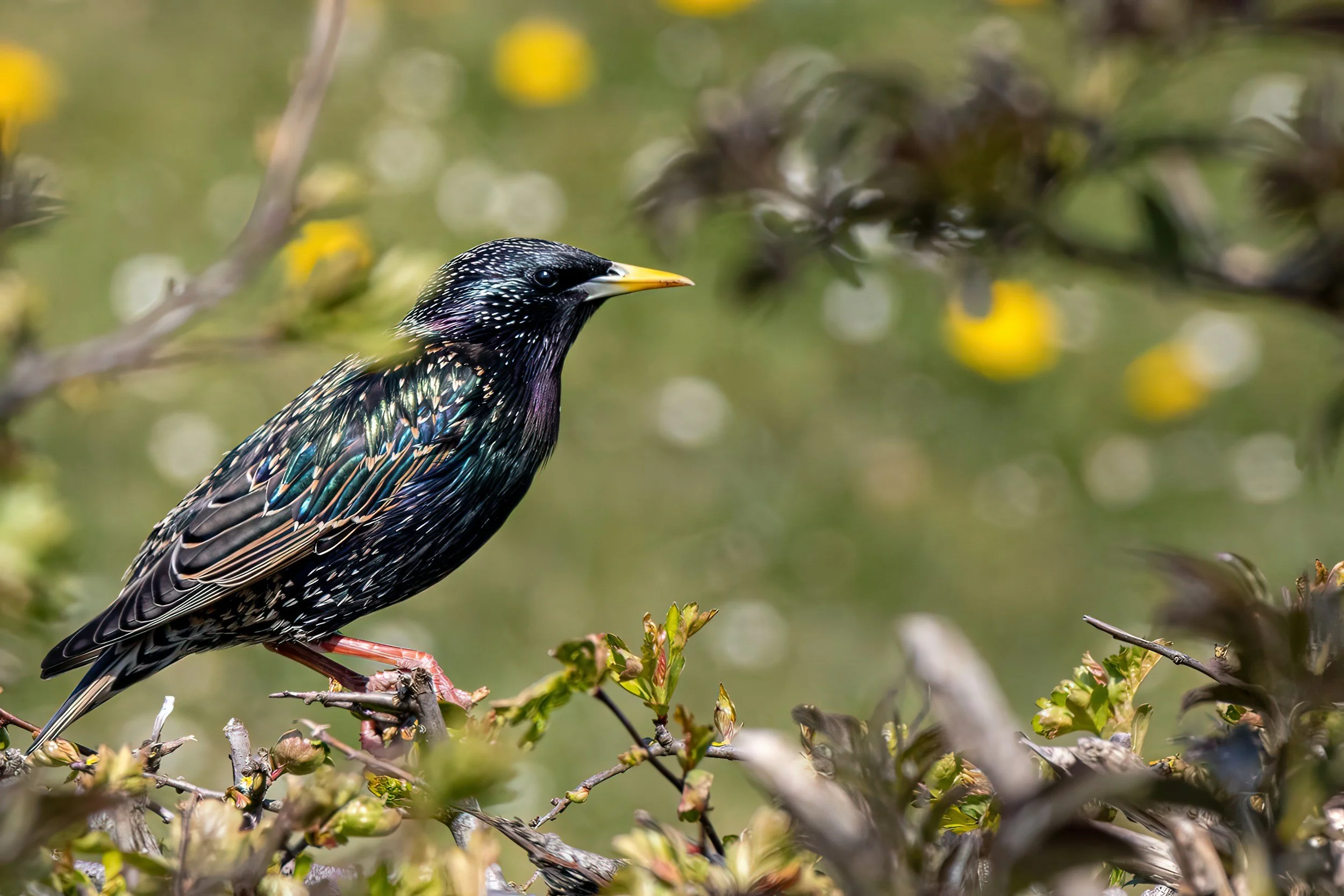
Starling Removal in Roanoke, VA

Starling eviction, vent cleaning & exclusion for Roanoke, Vinton, Cave Spring, Hollins, Salem & Roanoke County

European starlings are a persistent vent-nesting problem throughout Roanoke and Roanoke County. They are aggressive nesters that target dryer vents, bathroom exhaust vents, kitchen hood vents, open soffits, and gable vents across the region's mix of older and newer residential neighborhoods. Once they establish a nesting site, they return to the same vents season after season — and the nest material compounds each year until it becomes a genuine fire and health hazard.

Animal Dispatch handles starling removal throughout Roanoke — inspection, humane eviction, vent cleaning, and permanent exclusion backed by a 3-year guarantee.

Don't throw money at it. Throw Animal Dispatch at it.
Dryer vent nesting is a genuine fire hazard. Starlings build large, dense nests of dry grass and straw. When compacted inside a dryer vent duct, that material sits in the path of hot exhaust air. A dryer taking significantly longer than normal to dry a load is often the first practical sign. The primary nesting targets in Roanoke are dryer vents, bathroom exhaust vents, and kitchen hood vents.
Starling pressure near Roanoke
Roanoke's established residential neighborhoods — particularly older homes with unguarded dryer vents, open soffit returns, and aging gable vent screens — see consistent starling pressure throughout the spring and early summer nesting season. Starlings are cavity nesters that have adapted completely to residential structures, and any vent opening without a proper guard is a candidate. Properties in Cave Spring, Hollins, Vinton, and older Roanoke city neighborhoods with mature trees nearby are among the higher-pressure areas — starlings congregate in trees before moving to structures.
Signs of a Starling Nest in Your Vents
Sounds from vents during the dayChirping, scratching, or rustling from a dryer vent, bathroom exhaust, or kitchen hood vent during daylight hours — especially in spring. Starlings are diurnal; daytime vent noise in spring is a strong indicator.
Dryer taking longer than normalRestricted airflow from a nest-blocked dryer vent causes longer drying cycles, excessive heat, and reduced dryer efficiency. One of the most practical early warning signs.
Nest material visible at vent openingStraw, grass, twigs, or feathers protruding from or accumulating around a vent opening — often visible from the ground on dryer vents or from the roofline on gable openings.
White staining on exteriorWhite droppings on siding, windowsills, or foundation directly below an active vent opening — a reliable indicator of a regularly used nesting or entry point.
Odor from vents when runningA musty or ammonia odor coming from vents when the dryer or exhaust fan runs — indicating accumulated droppings and decomposing nesting material inside the duct.
Flock activity on rooflineLarge groups of starlings landing repeatedly on the same section of roof or roofline — a reliable indicator of an active nesting site nearby on the structure.
Our Starling Removal Process
1
Inspection — $75

We inspect all vents, soffits, and gable openings — identifying active nesting sites, documenting with photos, and determining whether chicks are present. Vent-nesting birds are sometimes mistaken for bats or mice; proper identification before any work is essential.

2
Humane Eviction — $200–$400

One-way exclusion devices allow birds to exit but not re-enter. Chick timing is managed carefully — sealing a duct with live young inside is not an option. We tell you honestly what the timing means for your job.

3
Vent Cleaning — $250–$600

Dryer, bathroom, and kitchen vents cleaned of compacted nest material and droppings. Ducts sanitized with wildlife-safe disinfectant. Airflow restored and fire hazard cleared.

4
Permanent Exclusion — $450–$2,800+

Wildlife-rated vent guards installed at all vulnerable openings. Gable vent screening and soffit gap sealing where needed. Photo documentation of all completed work. 3-year guarantee on all full exclusion work.

Frequently Asked Questions
Yes — genuinely. Starlings build large dense nests of dry grass, straw, and twigs. When packed into a dryer vent duct, that material sits directly in the path of hot exhaust air from the dryer. Blocked and restricted dryer vents are a documented cause of residential dryer fires. If your dryer is taking significantly longer than normal to dry a load, a vent nest should be on the list of things to rule out. Beyond fire risk, blocked vents also cause the dryer to run hotter and longer, shortening appliance life.
Almost certainly, if the entry point isn't properly sealed. Starlings have strong site fidelity — they return to the same nesting sites year after year, and other birds in the flock will take over a vacated site even if the original pair is gone. Removing the nest without installing a proper vent guard means the site will be reoccupied the following spring. Permanent vent guards are the only reliable solution. All our full exclusion work is backed by a 3-year guarantee.
European starlings are an invasive species and are not protected under the Migratory Bird Treaty Act — so there are no federal restrictions on removing their nests. However, the challenge is that removing the nest without cleaning the duct and sealing the entry point means the problem recurs immediately. Duct cleaning requires the right equipment to remove compacted material without pushing it further into the system. And during active chick season — typically March through June — nest removal must be timed carefully to avoid trapping live young in the duct.
Timing and sound are the clearest indicators. Starlings are diurnal — their vent activity is during daylight hours, with chirping, scratching, and rustling from vents during the day. Bats are typically active at dusk and through the night. Mice in walls produce scratching sounds at various hours and are often audible in the walls themselves rather than from a specific vent. Chirping or rustling specifically from a dryer vent, bathroom exhaust vent, or kitchen hood during daylight hours — particularly in spring — is a strong indicator of starlings.
Prevention Tips for Roanoke Homeowners
  • Install wildlife-rated vent guards on all dryer vents, bathroom exhaust vents, and kitchen hood vents — standard plastic vent covers are not sufficient and are easily pushed open by starlings
  • Screen gable vents with hardware cloth if the existing screen is aging or damaged — any gap large enough for a starling to squeeze through will be found
  • Inspect vents annually at the start of the spring nesting season — March is when starlings begin nest site selection in Virginia
  • On seasonal properties, inspect all vents on arrival each spring before assuming the duct system is clear
  • If your dryer is taking longer than normal to dry clothes, rule out a vent nest before calling an appliance repair service

Starling problem in Roanoke?

Sounds from a vent during the day, a dryer running longer than normal, or visible nest material at a vent opening — any of these is the right time to call. Our inspection identifies every active site and tells you exactly what removal and exclusion will take.

Schedule an Inspection — $75 Contact Us