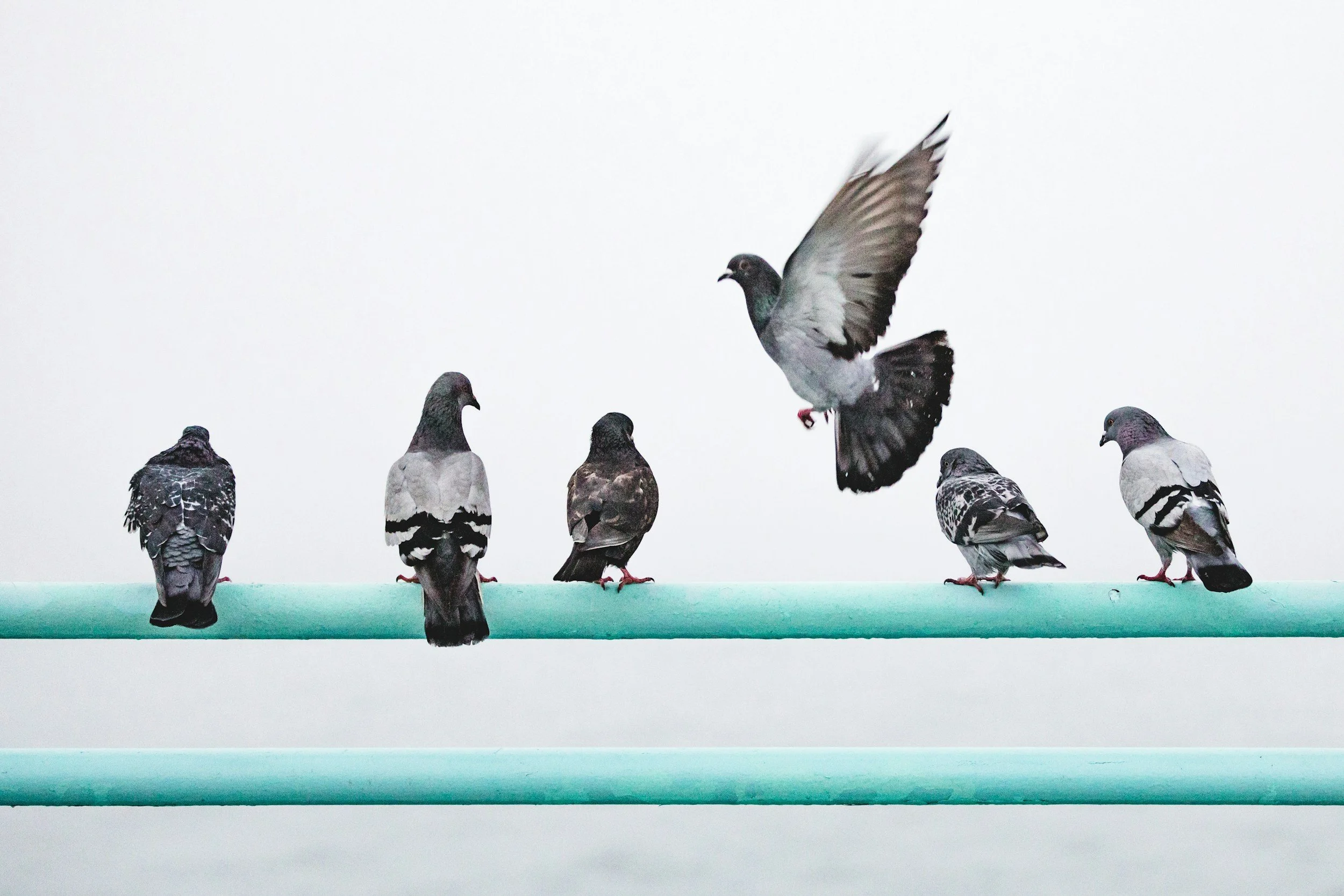
Pigeon Removal in Roanoke, VA

Pigeon removal, cleanup & exclusion for Roanoke, Vinton, Cave Spring, Hollins, Salem & Roanoke County

Pigeons are a persistent roosting and nesting problem in Roanoke — on commercial buildings, older downtown structures, warehouse rooflines, loading docks, and any ledge or sheltered surface that offers reliable cover near food. They are diurnal and site-loyal: once a flock establishes a roosting area, they return to the same location day after day. Deterrence alone doesn't solve the problem. Cleanup, conditioning, and physical exclusion are what break the cycle.

Animal Dispatch handles pigeon removal throughout Roanoke — inspection, guano cleanup, deterrence, and permanent exclusion for residential and commercial structures.

Don't throw money at it. Throw Animal Dispatch at it.
No poisons. No toxic repellents. Poisons don't solve pigeon problems — a poisoned bird is replaced by another from the same flock. Physical exclusion is the only lasting solution. We deny access to the roosting surface and clean up the guano and nest debris that creates the scent signal drawing them back.
Pigeon pressure near Roanoke
Roanoke's commercial districts, older downtown buildings, warehouse and industrial areas, and the mix of residential and commercial structures throughout the city and county face consistent pigeon pressure. Pigeons favor flat or low-pitch roofs, ledges, HVAC equipment, signage, solar panels, and any overhead beam or rafter in an open structure. The older commercial and industrial building stock in Roanoke's core and surrounding areas gives flocks numerous roosting options — and once established, their guano accumulation is rapid and damaging. Pigeon droppings are highly acidic and degrade roofing materials, metal surfaces, and paint quickly.
Signs of a Pigeon Roosting Problem
Guano accumulation on surfacesWhite-gray droppings concentrated on ledges, roofing, HVAC equipment, dock decking, vehicles, or siding below roosting areas. Pigeon guano is acidic and builds up fast — a small flock generates significant accumulation within weeks.
Cooing and wing soundsPersistent soft cooing from rafters, beams, ledges, or attic cavities during daylight hours. Fluttering and wing-clapping sounds during takeoff from roosting surfaces are also common.
Nesting debris on ledges or beamsLoose piles of feathers, sticks, and debris on ledges, rafters, and overhead beams — pigeons don't build traditional nests, just loose accumulations of material on flat or sheltered surfaces.
Flock activity on rooflinesConsistent daily presence of pigeons on the same roofline, ledge, or structure — the same flock returns to the same site each day. Repeated use of the same flight path to and from the structure is a reliable indicator.
Structural or entry point damageLoose siding, missing soffit panels, open barn entries, or large damaged roof intersections being used for access — pigeons enter through openings significantly larger than what starlings use.
Odor from enclosed roost areasA strong ammonia or musty odor from an attic, barn, warehouse space, or enclosed structure where pigeons have been roosting long-term. Indicates significant guano and nesting debris accumulation.
Our Pigeon Removal Process
1
Inspection — $75 residential / $195 commercial

We inspect all affected areas — roofs, ledges, rafters, attics, soffits, HVAC equipment, and structural entry points. We identify roosting and nesting zones, document guano accumulation with photos, and build a plan for cleanup, deterrence, and permanent exclusion.

2
Deterrence & Stabilization — $250–$650

Visual deterrents, motion repellents, and temporary blocking of high-traffic roosting areas begin conditioning the flock while the exclusion plan is finalized. This step also prevents recontamination of areas being cleaned.

3
Guano Cleanup & Sanitation — $300–$1,200

Removal of droppings, feathers, and nesting debris. Surface disinfection and enzyme-based odor control. Proper protective equipment and containment throughout — dried pigeon guano carries Histoplasma spore risk similar to bat guano.

4
Permanent Exclusion — $800–$6,000+

Spike strips, netting, wire deterrent systems, and structural gap sealing installed at all active roosting areas. Solar panel exclusion mesh where applicable. Photo documentation of all completed work. Physical exclusion is the only lasting solution — deterrents alone don't break site loyalty.

Frequently Asked Questions
Pigeons are highly site-loyal — they have strong attachment to established roosting and nesting locations and will return repeatedly even after being disturbed. This is a product of their biology: they evolved as cliff-nesting birds that return to the same ledge year after year. Visual deterrents, noise, and hazing produce temporary displacement but not permanent removal. The only reliable solution is physical exclusion — spike strips, netting, or wire systems that deny access to the roosting surface entirely — combined with cleanup of previous nest and guano accumulation that creates the odor signal drawing them back.
Yes, in significant accumulations. Pigeon droppings are acidic and cause real structural damage — corroding metal, degrading roofing materials, and stripping paint. Beyond structural damage, large guano accumulations can harbor Histoplasma capsulatum, the same fungal organism found in bat guano, which causes histoplasmosis when dried spores are inhaled during cleanup. Accumulated droppings also attract insects, promote fungal growth, and create slip hazards on walkways and loading areas. Cleanup of established roost sites requires proper protective equipment and safe disposal.
Size of opening is the key difference. Starlings enter through small gaps — as little as an inch and a half — so starling exclusion focuses on vent guards and small structural gaps. Pigeons need larger openings and typically access structures through loose siding, missing soffit panels, open barn entries, and larger damaged roof intersections. Pigeon exclusion involves spike systems, netting, wire deterrents, and sealing of larger structural gaps. The cleanup requirement also differs — pigeon roost sites often involve significantly more accumulated guano and nesting debris than a typical starling vent nest.
No — and we won't. Toxic repellents and poisons create secondary exposure risks to other wildlife, pets, and people, and they don't solve the underlying problem. A poisoned pigeon is replaced by another from the same flock. Physical exclusion — preventing access to the roosting surface — is the only approach that produces a lasting result. Our pigeon work uses spike systems, netting, wire deterrents, and structural sealing to deny access permanently, combined with cleanup of existing roost debris.
Prevention Tips for Roanoke Property Owners
  • Install spike strips or netting on ledges, rooflines, and HVAC equipment before a flock establishes — prevention is significantly cheaper than cleanup and exclusion after the fact
  • Seal large structural gaps — loose siding, missing soffit panels, open barn entries — that provide pigeon access to enclosed spaces
  • Remove accessible food sources — spilled grain, open livestock feed, uncovered waste — that attract and hold flocks near structures
  • On seasonal lake properties, inspect covered dock structures and pavilions on arrival each spring — guano accumulation during vacancy compounds quickly
  • Do not feed pigeons — intentional feeding habituates flocks to specific locations and makes removal significantly more difficult
  • Address guano accumulation promptly — the odor from existing roost sites draws flocks back even after birds are removed

Pigeon problem in Roanoke?

Guano on commercial buildings, warehouse rooflines, older downtown ledges, and HVAC equipment — the longer it sits, the more damage it causes and the stronger the scent signal drawing the flock back. An inspection identifies every active site and tells you exactly what cleanup and exclusion will take.

Schedule an Inspection — $75 / $195 Contact Us