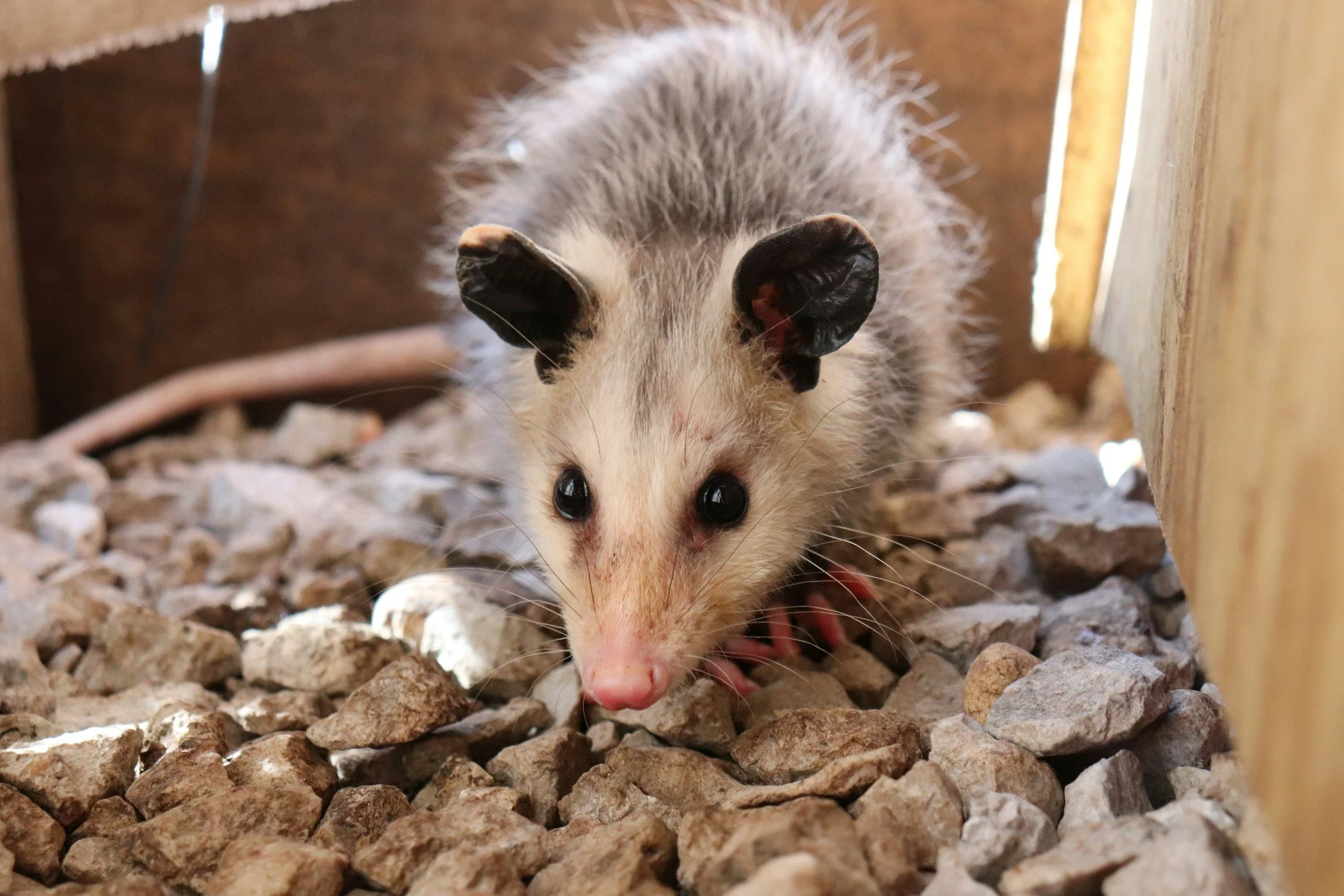
Opossum Removal in Lynchburg, VA

Humane opossum removal for Lynchburg, Madison Heights, Amherst, Rustburg & Campbell County

Opossums are a consistent nuisance wildlife encounter in Lynchburg, where the city's wooded hillsides, creek corridors, and mix of older and newer neighborhoods give them year-round food and shelter access. They shelter beneath decks, porches, crawlspaces, and sheds — using existing gaps rather than creating new ones.

Animal Dispatch handles opossum removal throughout Lynchburg with humane trapping and exclusion backed by a 3-year guarantee.

Don't throw money at it. Throw Animal Dispatch at it.
No separate inspection fee — it's included in the $225 trap setup. Traps are monitored remotely by camera, so there is no need for you to check them or pay for extra trips. No time limits or fees. Full exclusion work backed by a 3-year guarantee.
Worth knowing: Opossums consume thousands of ticks in a season and help control insect, rodent, and carrion populations. They are ecologically beneficial wildlife neighbors — when they remain outside structures. When they move beneath a deck or into a crawlspace, the musky odor, droppings, and risk of raising young in the structure make removal the right call.
Why Lynchburg properties attract opossums
Lynchburg's wooded hillsides, creek corridors, and established residential neighborhoods provide opossums with both food and den access. They feed on an exceptionally broad range of food — insects, earthworms, fallen fruit, garbage, pet food, carrion, and notably ticks. A single opossum can consume thousands of ticks in a season, making them useful wildlife neighbors when they remain outside structures. When they move under a deck or into a crawlspace, the musky odor, droppings, and potential for young to be raised beneath the structure make removal the right call.
Signs of Opossums on Your Lynchburg Property
Musky odor near structureLong-term opossum denning produces a distinctive musky smell beneath decks, porches, or from crawlspace vents. Often the first sign homeowners notice.
Heavy, slow movement soundsDeliberate walking or shuffling beneath floors or decks — heavier than a cat, much slower than squirrels. Typically nocturnal, though nursing mothers may move during daylight hours.
Droppings near den siteMedium-sized droppings resembling small dog feces, tapered at both ends. Scattered rather than concentrated. Found beneath decks, in crawlspaces, or near entry gaps.
Handprint-like tracksFive-toed tracks with a distinctive thumb-like inner toe on the rear feet — visible in mud or soft soil near den entry points.
Disturbed garbage or pet foodOverturned trash, emptied pet bowls, or disturbed compost overnight. Opossums are strong food-motivated foragers and return reliably to accessible food sources.
Direct sighting at nightSlow-moving, pointed face, rounded ears, long prehensile tail — often seen crossing yards, traveling fence lines, or near garbage areas after dark.
Our Opossum Removal Process
1
Trap Setup — $225

Inspection is included — no separate fee. Up to 2 traps and 2 cellular monitoring cameras placed at active entry points and den areas.

2
Camera Monitoring

Traps are monitored remotely by camera, so there is no need for you to check them or pay for extra trips.

3
Return Visits — $60 each

We return for pickup or reset when a catch occurs or traps need attention.

4
Exclusion & Structural Repairs — $600–$3,000+

Sealing access holes around foundations, crawl doors, and vents. Underground trench barriers or wire screening where needed. Backed by a 3-year guarantee on all full exclusion work.

Frequently Asked Questions
Opossums have a naturally lower body temperature than most mammals, which makes them poor hosts for the rabies virus — and documented cases are extremely rare. However, contrary to a common myth, they are not completely immune. The more important point for homeowners: a daytime opossum sighting alone is not a reliable indicator of rabies. Nursing mothers, animals disturbed from dens, and opossums foraging under pressure may move during daylight hours. Behavior matters more than timing when assessing concern.
Thanatosis — playing dead — is an involuntary defense mechanism, not a conscious choice. When severely threatened, an opossum may enter a catatonic state: limp, mouth open, tongue hanging out, sometimes releasing a foul-smelling fluid. This can last minutes to hours. It is not a sign of illness. An opossum that appears dead near your deck may simply be in this state and will recover on its own.
Possibly — opossums are transient animals and do not hold strong territorial boundaries. An opossum passing through may move on within a few days. However, one that has found a reliable food source near a sheltered gap will return regularly and may raise young beneath the structure in spring. If you're noticing consistent nightly activity, musky odor, or droppings accumulating, waiting is likely to make the situation worse.
Opossums are non-aggressive and strongly prefer retreat over confrontation. They may hiss or bare their teeth when cornered, but this is bluffing. Direct conflict with pets is uncommon. The more relevant concern is that opossums are attracted to the same food sources as pets — outdoor bowls left overnight are a primary attractant. Removing the food source is the single most effective opossum deterrent.
Prevention Tips for Lynchburg Homeowners
  • Remove pet food overnight — outdoor bowls left after dark are the single most reliable opossum attractant
  • Secure garbage with locking lids
  • Install an exclusion barrier around raised decks and shed foundations — hardware cloth buried at least 12 inches down and angled outward
  • Clear brush piles, woodpiles, and dense vegetation near structures that provide cover
  • Repair broken crawlspace vents and foundation edge gaps promptly
  • Pick up fallen fruit from trees near the house

Opossum problem in Lynchburg?

Musky odor or droppings beneath a structure are the right time to call. No separate inspection fee — we get traps in place and the cameras handle the monitoring.

Schedule Trap Setup — $225 Contact Us