Fox Removal in Roanoke, VA

Red and gray fox removal for Roanoke, Vinton, Cave Spring, Hollins, Salem & Roanoke County

Both red and gray foxes are common throughout Roanoke and Roanoke County — red foxes in the open fields, meadows, and suburban neighborhoods, gray foxes in the wooded hillsides, ravines, and green corridors running through the city. The two species share a service area but prefer different terrain, and both can cause real conflict when they den under a shed or deck in spring or begin targeting backyard poultry.

Animal Dispatch handles fox removal throughout Roanoke — inspection, deterrence, humane trapping when needed, and den closure.

Don't throw money at it. Throw Animal Dispatch at it.
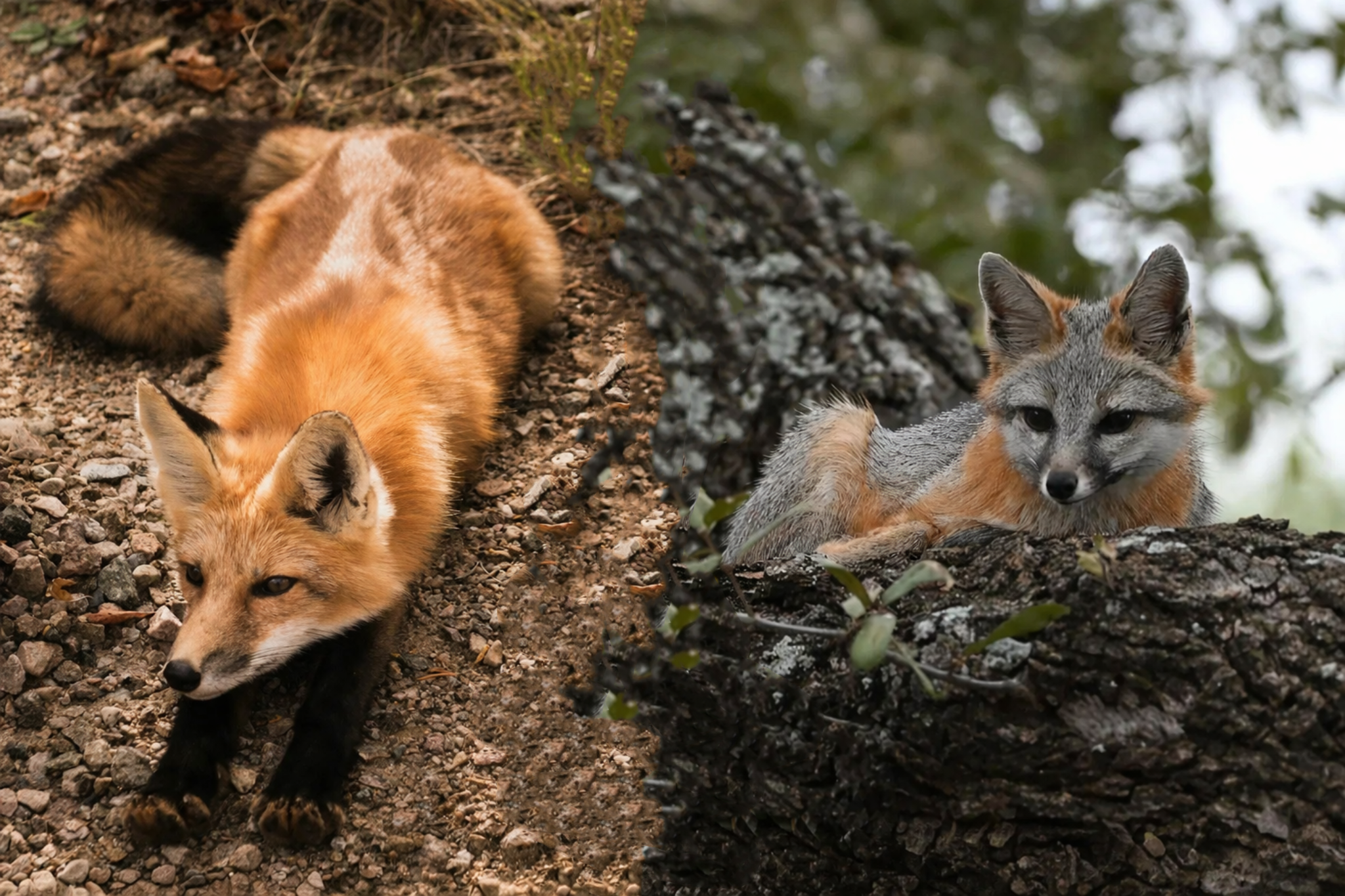
Two Species, Two Habitats Near Roanoke
Red Fox Vulpes vulpes — reddish-orange coat, white-tipped tail

Prefers open fields and suburban neighborhoods. Long-legged, fast, and highly adaptable to suburban and agricultural environments. Hunts mice, rabbits, and birds in open country. The more commonly spotted species in residential settings.

Gray Fox Urocyon cinereoargenteus — grizzled coat, black-tipped tail

Prefers wooded hillsides and ravines. The only canid in Virginia that can climb trees — strong hooked claws allow it to scale leaning trees and access areas a red fox typically wouldn't.

Fox activity near Roanoke
Roanoke's mix of open suburban neighborhoods and wooded hillsides supports both fox species throughout the area. Red foxes are common in Cave Spring, Hollins, and Vinton's residential edges where open fields and green spaces meet neighborhood properties. Gray foxes are more prevalent in the wooded ravines and hillside properties where tree cover is dense — and as the only canid in Virginia that can climb trees, gray foxes can access areas a red fox typically wouldn't. Both species den under sheds, decks, and outbuildings in spring.
Signs of Fox Activity Near Your Roanoke Property
Den beneath shed or deckGround-level dens in sheltered spaces beneath sheds, decks, outbuildings, and brush piles — most commonly established in March and April. Light digging at the entrance and musky scent are the first signs.
Poultry predationMissing birds, feathers near coop perimeter, or digging beneath coop walls overnight. Foxes are agile and motivated — they will exploit any gap in a coop structure repeatedly until access is denied.
Tracks and scatSmall dog-like tracks in soft soil near den sites or along regular travel routes. Twisted scat containing fur, seeds, and small bones — typically left on elevated or prominent spots along a travel path.
Vocalizations at nightHigh-pitched screams, raspy cries, and short barks — normal fox communication, especially during January–February breeding season. Often mistaken for a distressed person or cat.
Dawn and dusk sightingsRegular sightings at the same times and locations — foxes patrol established routes. Spring adults raising pups may also be seen during daylight hours while foraging to feed young.
Pup activity near denJuveniles playing near the den entrance in May and June — small fox pups tumbling and chasing at the entrance are often the first clear confirmation that a den is active and occupied.
Our Fox Removal Process
1
Inspection — $75

We assess the situation — species, active den location, whether pups are present, and what's drawing foxes to the property. The approach varies significantly based on what we find.

2
Deterrence First — $200–$450

If no pups are present, humane deterrence — motion lighting, scent repellents, temporary barriers — is often enough to encourage foxes to move on without trapping. Foxes are intelligent and responsive to environmental changes.

3
Humane Trapping — $350 setup + $85/visit

Used when deterrence fails or when pups are confirmed under a structure. Camera-monitored traps ensure fast, humane response. All family members — adults and pups — must be out before den closure.

4
Den Closure — $600–$1,800

Once all foxes are clear, ground-level entry points beneath sheds and decks are sealed against re-entry. Coop and poultry protection assessment included where relevant.

Frequently Asked Questions
Size is similar — both 7–15 pounds — but appearance and habitat differ clearly. Red foxes have reddish-orange coats, black legs, and a white-tipped tail. They prefer open areas: fields, farmland, and suburban neighborhoods. Gray foxes have a grizzled salt-and-pepper coat, a black-tipped tail, and a distinctive black stripe down the back. They prefer wooded habitat and are one of the only canids in North America that can climb trees. If you're seeing a fox in a wooded, heavily treed area, it's more likely a gray fox.
Not necessarily. Foxes are typically crepuscular — most active at dawn and dusk — but daytime sightings are common and not automatically a sign of illness. In spring and early summer, adult foxes raising pups must forage frequently to feed their young, which drives daytime activity. Behavior matters more than timing: a fox moving normally, foraging, or trotting through a yard is behaving naturally. A fox that is stumbling, disoriented, self-mutilating, or approachable without any fear response warrants a call.
It depends on timing and your tolerance. Foxes are transient — they may use a den for a few weeks and move on, or they may raise an entire litter over 8–10 weeks. If pups are already present, sealing the den is not an option until all animals are out. We can assess the situation, determine whether active pups are in the den, implement deterrence to encourage the family to move, or trap and remove if deterrence doesn't work. Timing is everything.
A properly built coop is the most reliable protection. Key features: hardware cloth (not chicken wire — foxes can bite through it) on all sides and the bottom, a latch that requires two steps to open, and no gaps larger than an inch. Foxes are agile and motivated — they can squeeze under loose edges, dig beneath walls, and scale low fencing. Motion lighting and electric fencing as a perimeter deterrent add an additional layer. Trapping foxes without securing the coop first typically results in a new fox discovering the same vulnerability.
Prevention Tips for Roanoke Homeowners
  • Secure poultry coops with hardware cloth — not chicken wire, which foxes can bite through — on all sides and the bottom
  • Use latches that require two steps to open — foxes are intelligent and have been documented working simple single-step latches
  • Block ground-level access beneath sheds and decks with hardware cloth before spring — March is when foxes begin den selection
  • Remove outdoor pet food overnight — food left outside is a reliable fox attractant
  • Secure garbage and compost — foxes are opportunistic and will revisit reliable food sources

Fox problem in Roanoke?

Denning under a structure or hitting your poultry — timing matters. Deterrence before pups arrive is the easiest path. We assess the situation first and recommend the right approach.

Schedule an Inspection — $75 Contact Us