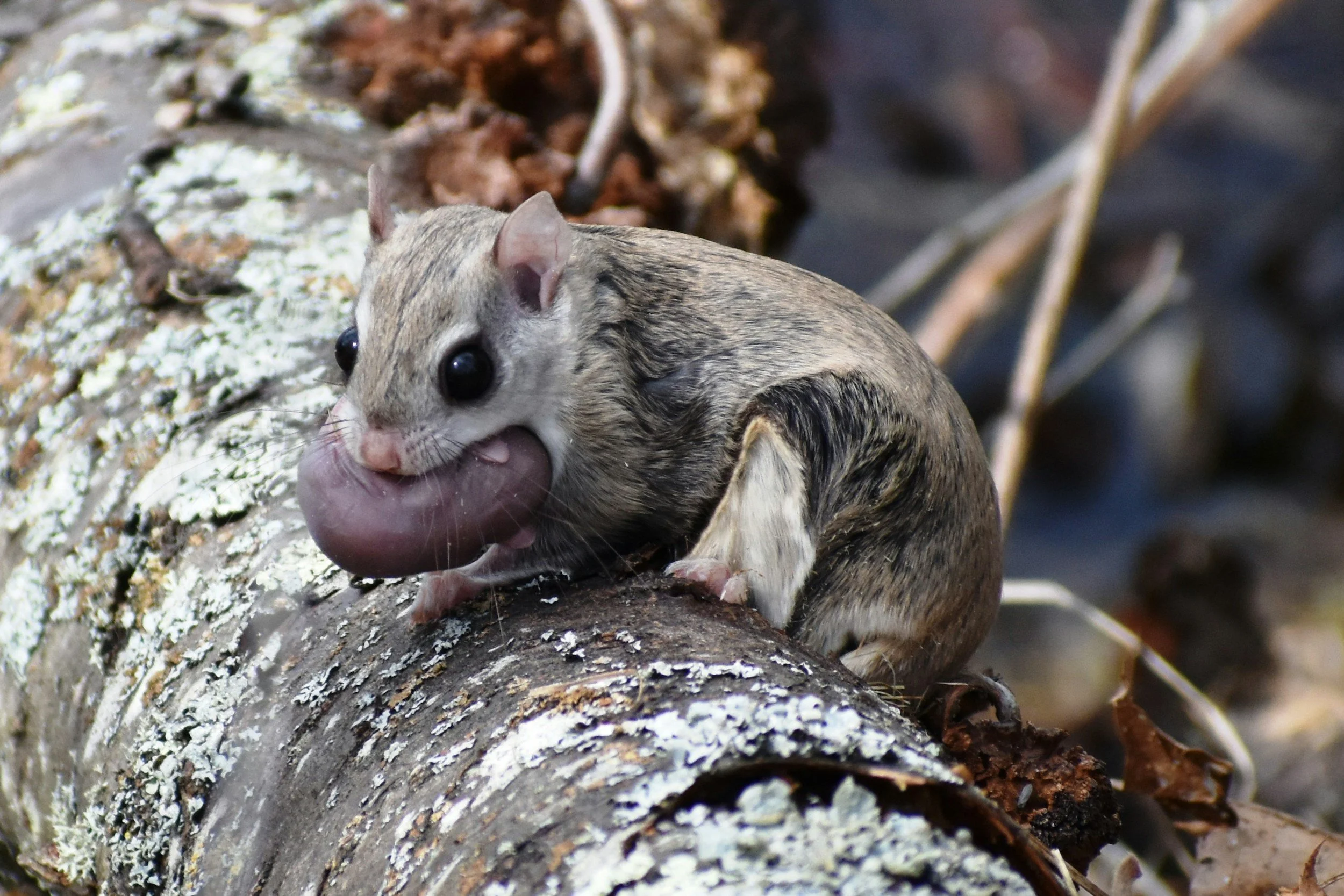
Flying Squirrel Removal in Smith Mountain Lake, VA

Humane flying squirrel removal for Smith Mountain Lake, Moneta, Westlake, Huddleston, Hardy & Bedford and Franklin County

Flying squirrels are a significant attic wildlife issue at Smith Mountain Lake, where the wooded shoreline, large seasonal homes with complex rooflines, and extended vacancy create ideal conditions for colony establishment. A flying squirrel colony that moves into a seasonal home in fall can spend the entire winter producing urine accumulation in the insulation before the owner returns in spring.

Animal Dispatch handles flying squirrel removal throughout the Smith Mountain Lake communities with full-home exclusion and a 3-year guarantee. $75 inspection.

Don't throw money at it. Throw Animal Dispatch at it.
The key identifier: timing of the noise. Gray squirrels are diurnal — active at dawn and dusk. Flying squirrels are typically nocturnal — activity begins shortly after dark. If the attic noise starts after sunset and sounds light and soft, flying squirrels are among the most likely explanations. They are most commonly confused with mice, gray squirrels heard after dark, and occasionally bats — not raccoons, whose movement is slow and heavy and nothing like the soft pattering of a flying squirrel colony.
3-Year Full-Home Exclusion Guarantee — Flying squirrel exclusion must be thorough. Sealing one gap while others remain open relocates the entry but doesn't solve the problem. Full-home exclusion seals all potential entry points and is backed by a 3-year guarantee.
Why Smith Mountain Lake homes attract flying squirrels
Smith Mountain Lake's wooded lots, mature hardwood canopy, and mix of full-time and seasonal homes create particularly favorable flying squirrel conditions. Seasonal vacancy means colonies can establish, grow, and produce months of urine accumulation before anyone notices. Flying squirrels are nocturnal and their sounds are soft — light pattering after dark, easily dismissed on a weekend visit. Large SML homes with multiple vent systems and complex rooflines provide numerous potential entry points, all requiring proper inspection and full-home exclusion to address permanently.
Signs of Flying Squirrels in Your Smith Mountain Lake Home
Night-only noiseSoft pattering, light skittering, and rustling sounds that begin shortly after dark. Multiple animals moving — often audible in different parts of the attic simultaneously due to colony structure.
Ammonia odor from atticThe primary damage indicator. Colony urine soaks into insulation over time and produces a distinct ammonia smell that permeates into the living space. Often the first sign that prompts action.
Tiny entry gapsFlying squirrels enter through existing openings as small as a nickel — no chewing required. Small rub marks or staining around ridge vents, gable vents, or construction joints indicate repeated use.
Clustered droppingsTiny dark rice-grain droppings found in clusters near nest pockets in insulation — not scattered broadly like gray squirrel droppings.
Shredded insulation nestsSoft nest pockets built from shredded insulation, leaves, and bark fibers in attic corners — flying squirrels create snug communal nests.
High-pitched night chirpsSoft birdlike chirps or squeaks at night — flying squirrel communication. Many of their vocalizations are ultrasonic and not audible to humans, but occasional chirps are.
Flying Squirrel vs. Gray Squirrel vs. Mouse
Flying Squirrel
  • Strictly nocturnal — noise after dark only
  • Colony of 5–20 in one void
  • Enters through nickel-sized gaps
  • No structural chewing damage
  • Urine odor is primary impact
  • Clustered droppings near nest
Gray Squirrel
  • Diurnal — active at dawn and dusk
  • Typically 1–2 animals
  • Chews entry holes in wood
  • Chewing and wiring damage
  • Nut caches in insulation
  • Scattered droppings along paths
Mouse
  • Activity at any hour, day or night
  • In walls as well as attic
  • Scratching inside wall voids
  • Gnaws food packaging and wiring
  • Droppings throughout structure
  • Enters from ground level
Bat
  • Nocturnal — exits at dusk consistently
  • Colony structure, similar to flying squirrel
  • Crumbly guano with insect fragments
  • Dark smudge marks at entry gaps
  • Cannot be trapped — exclusion only
  • Enters through 3/8-inch gaps
Our Flying Squirrel Removal Process
1
Inspection — $75

We identify the species, locate all entry points, assess nest and urine accumulation, and determine the extent of the colony. Proper identification before exclusion work begins is essential.

2
Humane Removal

One-way exclusion devices allow flying squirrels to exit but not re-enter. Timing adjusted if young pups are in the nest — litters are raised twice yearly in late winter and early summer.

3
Full-Home Exclusion

All entry points sealed — every gap down to nickel-size at ridge vents, gable vents, construction joints, and soffits. Partial exclusion on a flying squirrel job is rarely effective.

4
3-Year Guarantee

If flying squirrels re-enter through a point we sealed, we return. Flying squirrels have strong site fidelity and return to successful den locations — the exclusion must be complete.

Frequently Asked Questions
The timing of the activity is the clearest indicator. Flying squirrels are typically nocturnal — if the noise starts shortly after dark and stops before dawn, flying squirrels are far more likely than mice. Mice produce constant low-level scratching at any hour. Flying squirrel sounds are soft light pattering and skittering — similar to mice but starting precisely at dusk and coming from the attic rather than walls. A strong ammonia odor from the attic without obvious rodent activity below is another indicator of a flying squirrel colony rather than mice.
More than most homeowners expect. Flying squirrels are communal — they share attic voids, particularly in winter when they huddle together for warmth. Groups of 5–20 individuals in a single void are common. This colony structure is one reason flying squirrel urine damage is often more extensive than gray squirrel damage — it's not one animal producing urine, it's a group.
Flying squirrels do chew — they are squirrels after all, with continuously growing incisors that require gnawing to maintain. However, their chewing behavior differs from gray squirrels in an important way: flying squirrels typically enter through preexisting gaps rather than chewing new entry holes, and structural chewing damage is generally less severe than what gray squirrels produce. Their primary impact in most infestations is urine accumulation from the colony — over time, urine from a group of 5–20 animals soaks into insulation, creates ammonia odor that permeates the living space, and can attract insects to the nest area. Wiring is still a chewing target and should not be overlooked.
Flying squirrels access structures through multiple tiny gaps — gaps as small as a nickel at ridge vents, gable vents, and construction joints. Sealing one entry point while others remain open simply relocates the entry rather than solving the problem. Full-home exclusion identifies and seals all potential entry points simultaneously, backed by a 3-year guarantee. Partial exclusion on a flying squirrel job rarely holds.
Prevention Tips for Smith Mountain Lake Homeowners
  • Screen ridge vents and gable vents with fine hardware cloth — standard screen is not small enough for flying squirrel gaps
  • Inspect construction joints and soffit-to-roofline transitions annually — these develop gaps over time
  • Trim tree branches that reach or overhang the roofline — flying squirrels use them as launch points
  • If you detect ammonia odor from the attic, act quickly — colony urine damage compounds over time
  • On seasonal properties, inspect the attic on arrival each season before assuming all is well

Flying squirrel problem in Smith Mountain Lake?

Noise after dark that sounds like mice but comes from the attic is a common flying squirrel pattern. An inspection identifies the species, the entry points, and what full-home exclusion will take.

Schedule an Inspection — $75 Contact Us